
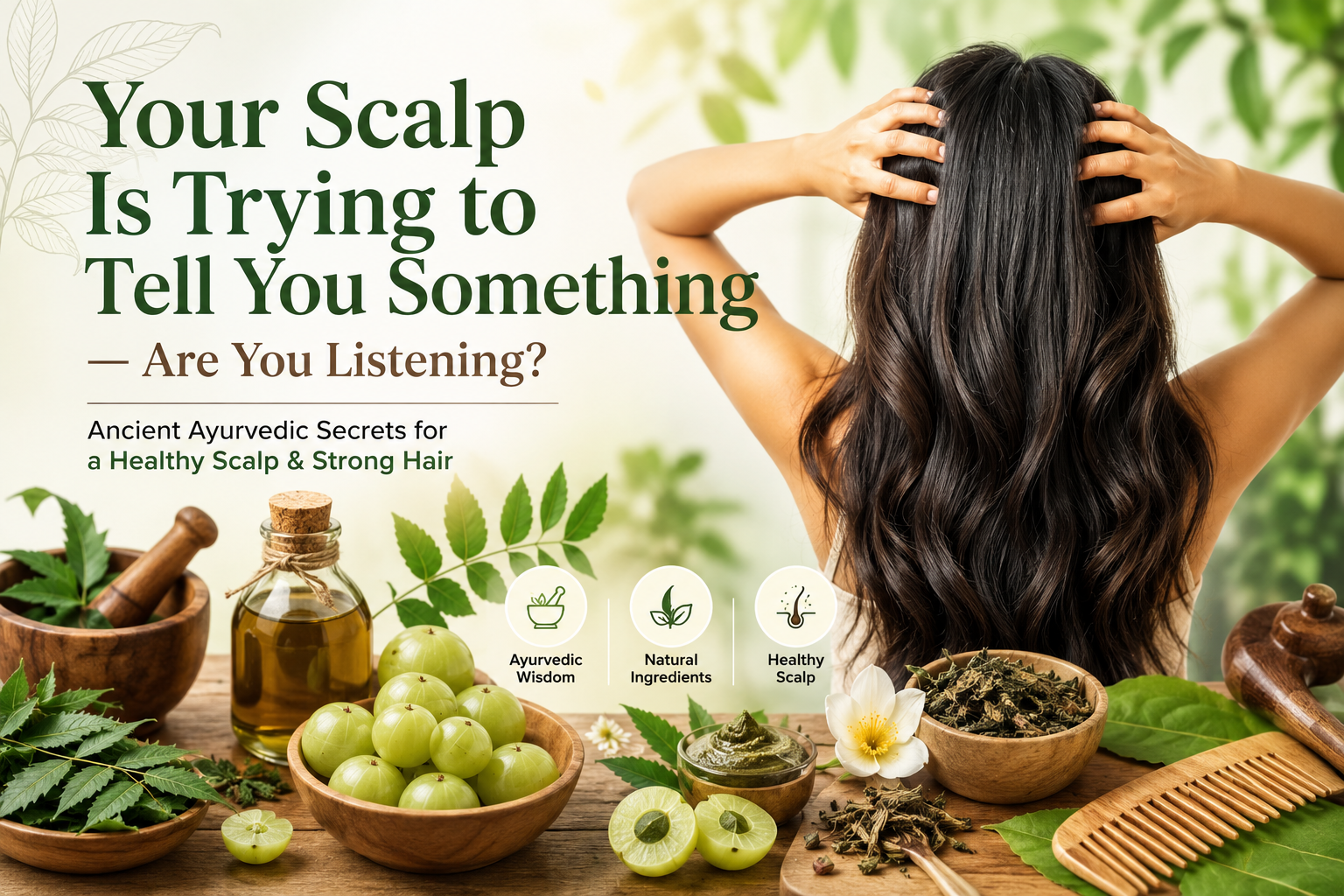
Your Scalp Is Trying to Tell You Something— Are You Listening?
Let me ask you something personal. When was the last time you actually thought about your scalp?
Not your hair — your scalp. The skin underneath. The ground from which every strand of your hair grows.
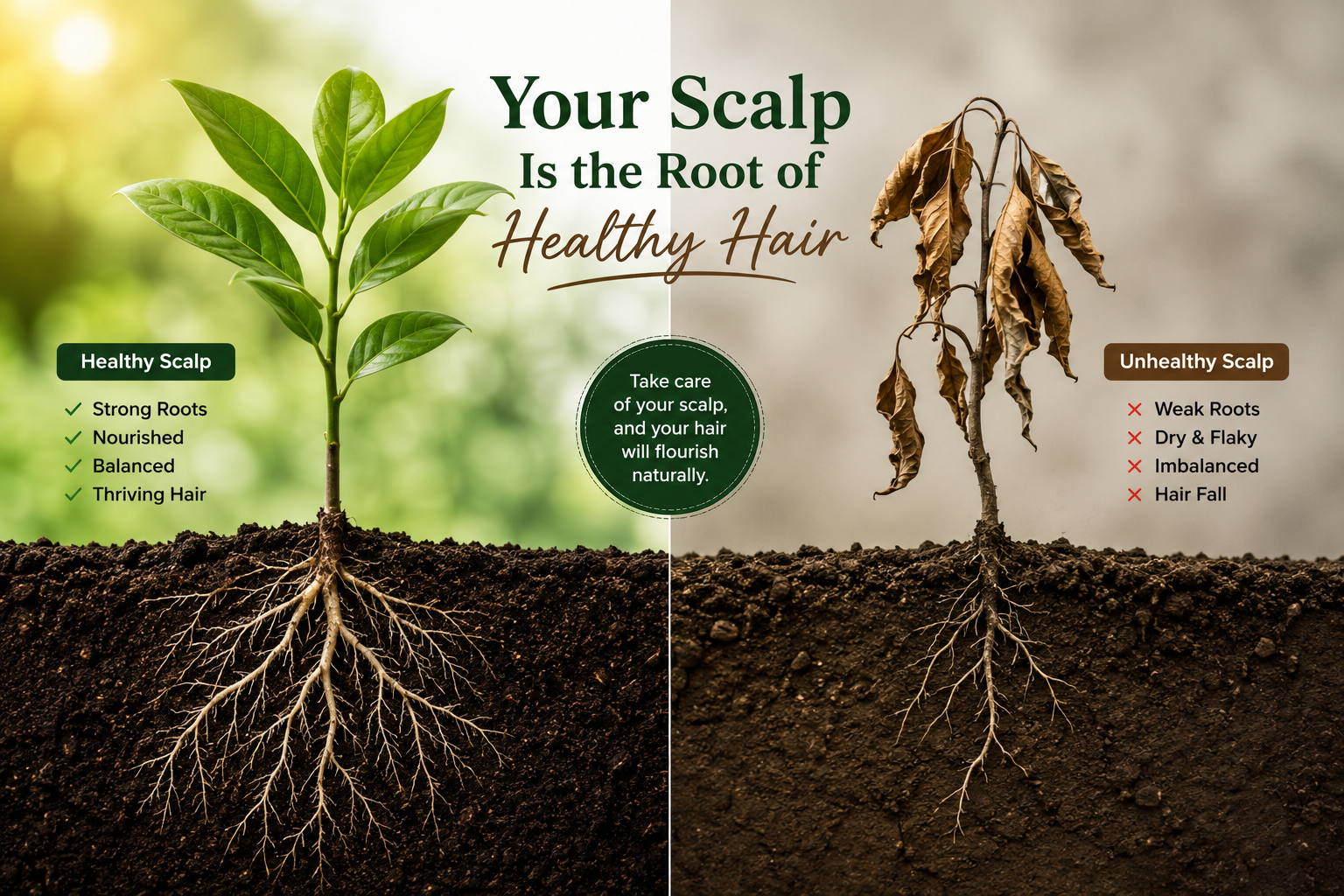
Most of us obsess over our hair — the shine, the length, the frizz — but completely ignore the very foundation that determines all of it. It’s like watering the leaves of a plant while the roots are bone dry.
Here’s the uncomfortable truth: if your scalp isn’t healthy, your hair never truly will be. And the even more uncomfortable truth? Most of what we’re doing to our scalps today — the sulphate-heavy shampoos, the dry shampoo dependency, the hot tool obsession — is quietly wrecking it.
But there’s a body of knowledge that’s been quietly getting this right for over 3,000 years.
What Ayurveda Knew That We’re Only Just “Discovering”
Ayurveda, India’s ancient system of medicine has always treated the scalp as a living ecosystem. Not a surface to be cleaned. Not a problem to be fixed. An ecosystem to be nurtured.
Long before dermatologists were talking about the scalp microbiome (which, by the way, is now one of the hottest areas of trichology research), Ayurvedic practitioners were prescribing herbs, oils, and rituals based on one core principle: a balanced scalp = thriving hair.
And modern science? It’s catching up fast.
A 2021 study published in Communications Biology found that the scalp has a distinct microbial community — bacteria and fungi that, when balanced, protect against inflammation and hair loss. Disrupt that balance, and you get dandruff, seborrheic dermatitis, thinning — the whole mess.
Ayurveda called this imbalance a “Pitta” or “Kapha” aggravation. Science calls it dysbiosis. Different vocabulary. Same problem.
Ayurveda called this imbalance a “Pitta” or “Kapha” aggravation.Science calls it dysbiosis. Different vocabulary.Same problem.
The Ayurvedic Scalp Care Secrets (That Actually Work)
Let’s get into the actual practices, because this isn’t just philosophy. These are things you can start doing this week.
1. Abhyanga for the Scalp – Hot Oil Massage
This is the one people roll their eyes at until they try it.
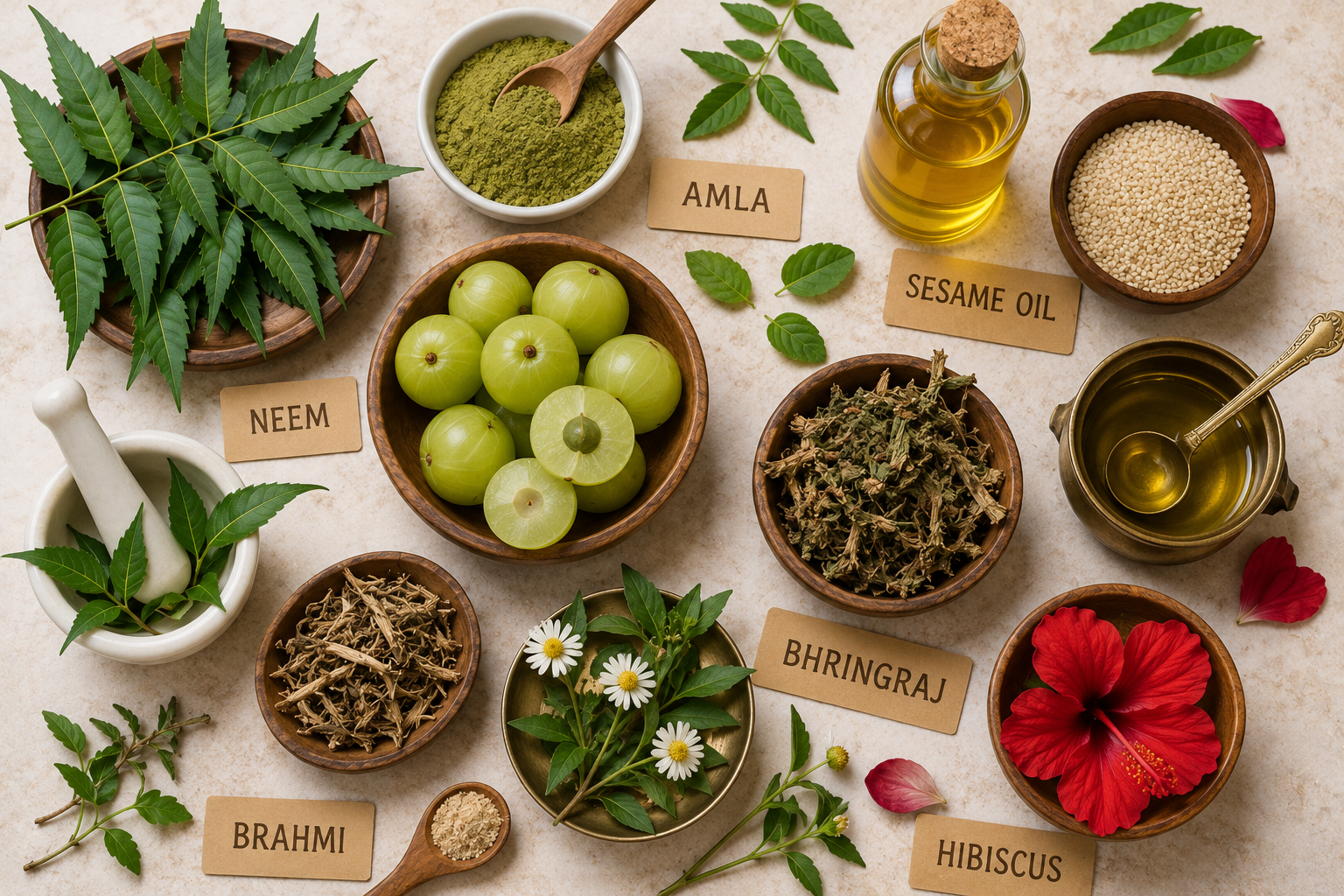
Warm oil massage or Shiro Abhyanga is one of Ayurveda’s most celebrated scalp rituals. The oils traditionally used? Brahmi, Bhringraj, Amla, and Sesame. Each chosen for its specific effect on scalp tissue and the nervous system.
Here’s the modern science behind why this works: scalp massage has been shown in clinical studies to increase hair thickness by stretching dermal papilla cells — the cells at the base of each hair follicle. Additionally, warm oil creates a brief occlusive barrier that helps the scalp retain moisture and reduces transepidermal water loss.
Bhringraj oil, in particular, has shown inhibitory effects on 5-alpha reductase — the same enzyme that causes androgenetic hair loss. The same enzyme that expensive DHT-blocking shampoos are trying to target.
Ancient wisdom. Modern mechanism. Same result.
2. Neem — Nature’s Anti-Fungal Powerhouse
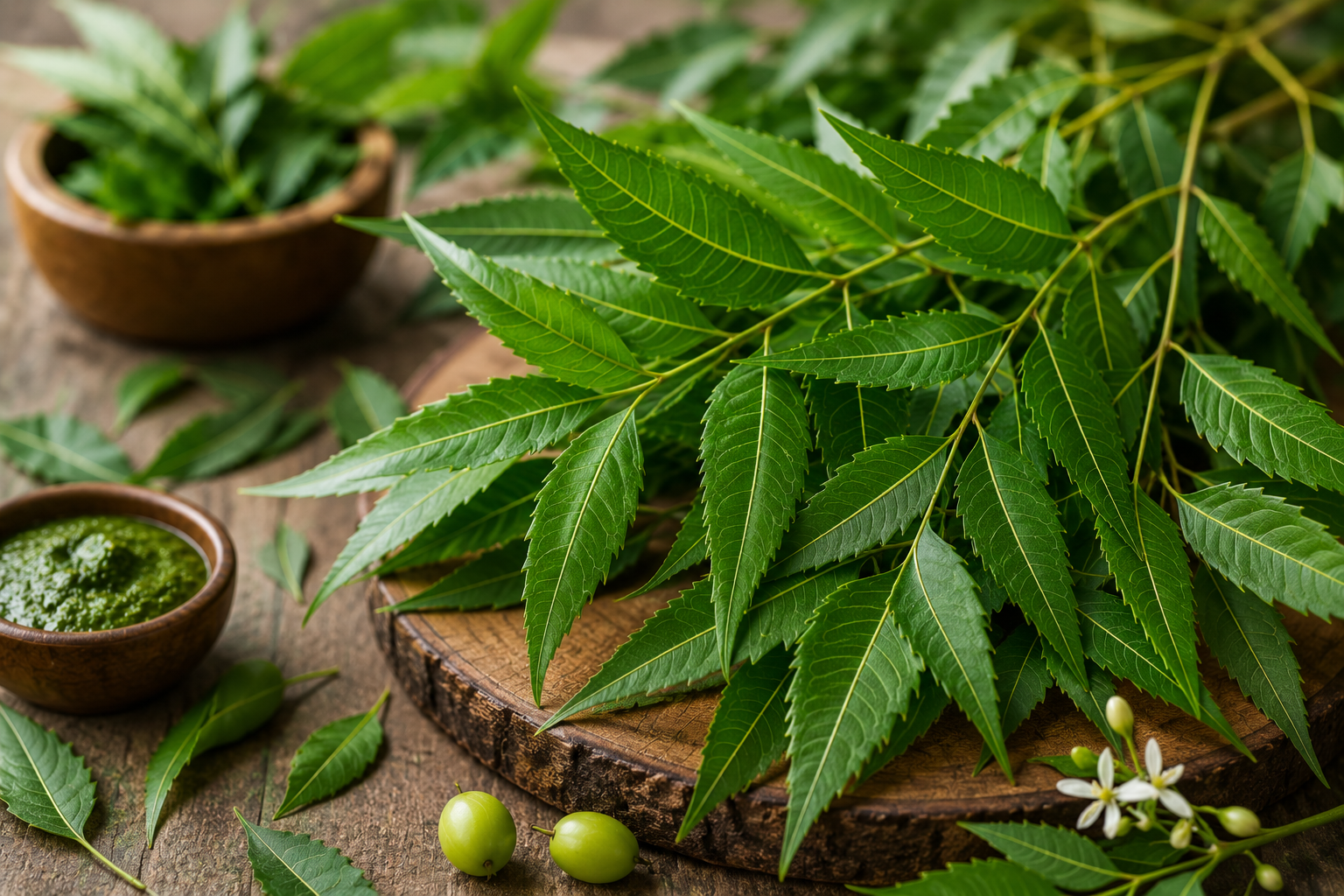
Dandruff isn’t just about dryness. In most cases, it’s caused by a yeast called Malassezia that over proliferates on the scalp. Ayurveda has used Neem (Azadirachta indica) for millennia to address exactly this.
And science backs it up completely. Neem contains nimbidin and nimbin — compounds with proven antifungal and anti-inflammatory properties. A study in the Journal of Ethnopharmacology found neem extracts to be effective against multiple Malassezia strains.
No synthetic antifungals. Just a leaf that humans figured out thousands of years ago.
You can incorporate neem through:
- Neem-infused hair oils
- Neem powder mixed into your hair mask
- Neem water as a scalp rinse
3. Amla – The Vitamin C Bomb Your Scalp Needs
Amla (Phyllanthus emblica, or Indian gooseberry) is arguably the most researched hair herb in Ayurveda. And for good reason.
Amla is one of the richest natural sources of Vitamin C on the planet — far exceeding oranges. Vitamin C is critical for collagen synthesis, and collagen is what keeps the dermal layer of your scalp, including your hair follicles, structurally intact.
Beyond Vitamin C, amla is rich in tannins and gallic acid, which have been studied for their ability to inhibit hair follicle regression — the process by which follicles shrink and eventually stop producing hair.
In plain terms: amla may help keep your hair follicles alive and active longer. That’s not a small thing.
4. Ditch the Daily Shampoo (Seriously)
Ayurveda never prescribed daily cleansing. It recommended periodic cleansing with gentle, herb-based formulations, often Shikakai or Reetha that clean without stripping.
This aligns precisely with what dermatologists are now saying: over-cleansing destroys the scalp’s acid mantle (its natural pH-balanced protective layer) and disrupts the microbiome. The result? The scalp overproduces sebum to compensate, making your hair greasier faster, creating a cycle of more washing.
Washing your hair two to three times a week, using a mild, sulphate-free formula, is far closer to what your scalp actually needs.
5. Diet Is Scalp Care
Ayurveda insists on this and most modern scalp advice ignores it entirely: what you eat shows up on your scalp.
Excess heat-generating foods (spicy, oily, processed) aggravate Pitta—correlating directly with scalp inflammation, premature greying, and hair loss. Modern nutrition research confirms that diets high in refined carbohydrates and inflammatory fats are associated with increased sebum production and scalp inflammation.
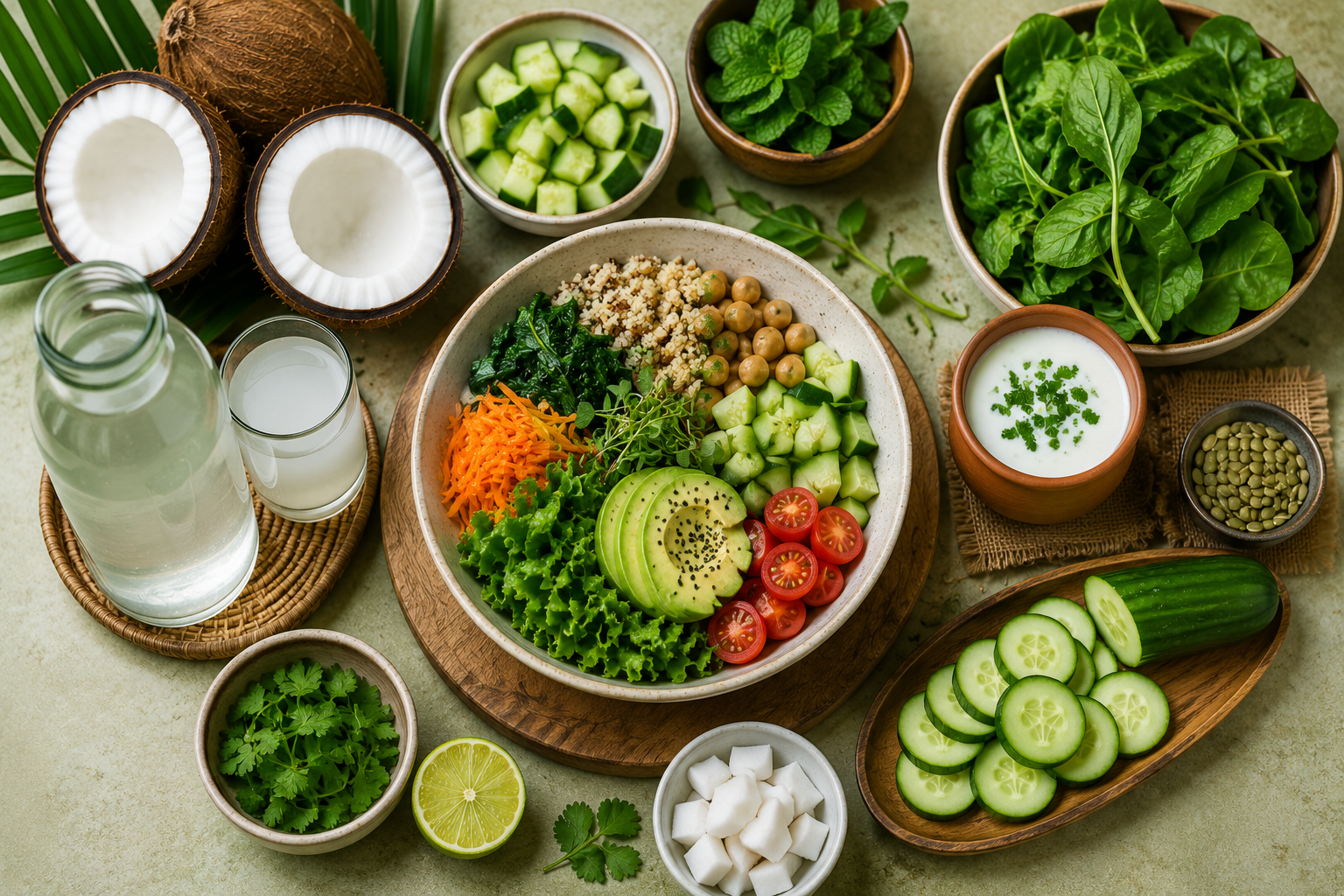
Cooling foods—cucumber, coconut, leafy greens, buttermilk—are what Ayurveda prescribes for a Pitta-inflamed scalp. These also happen to be foods rich in zinc, biotin, and omega-3s—the nutrients hair science has repeatedly linked to healthy follicle function.
The Bottom Line
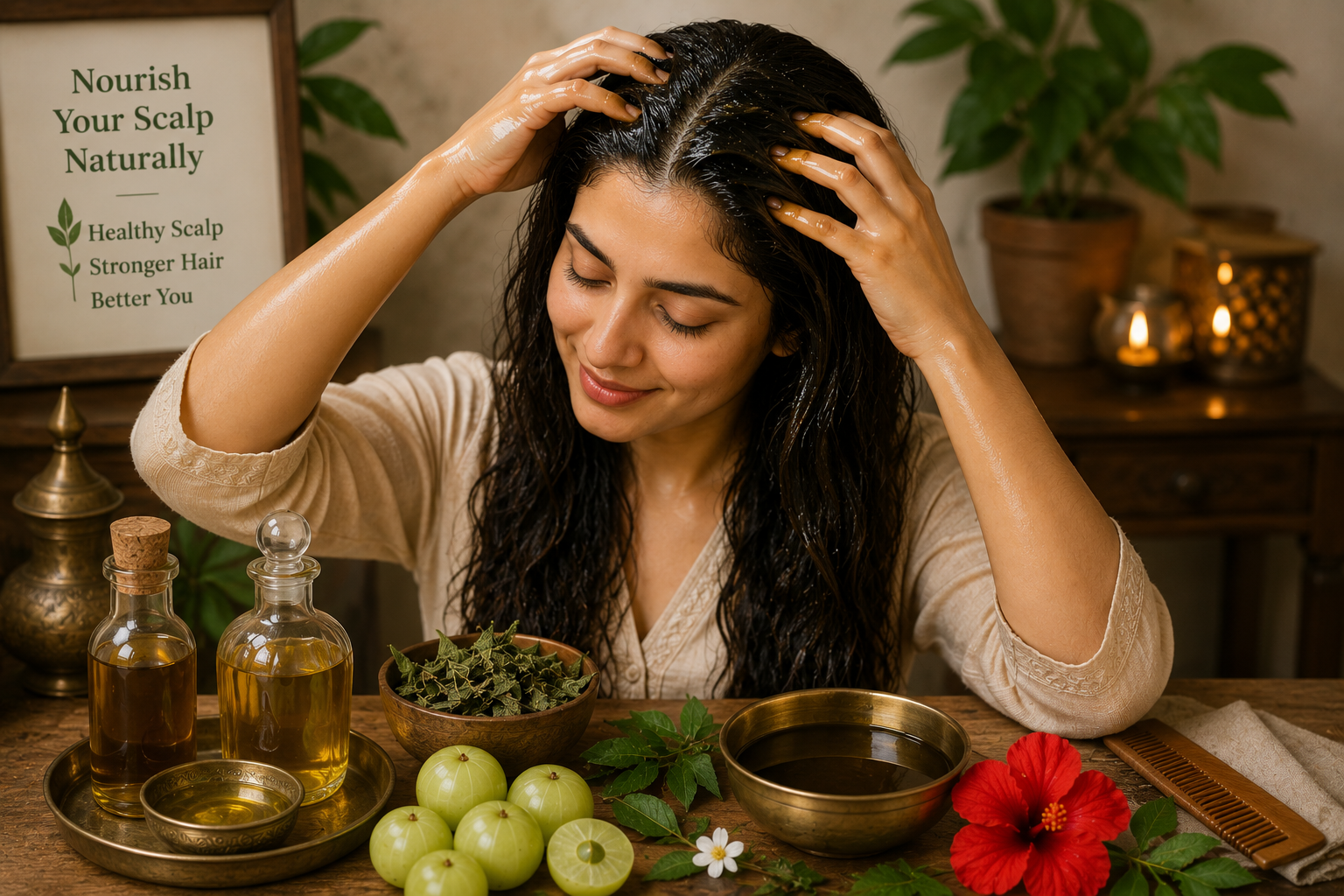
The scalp care industry wants you to believe that the solution is always the next product, the next ingredient, the next launch. But 3,000 years of Ayurvedic practice—now being validated by modern research—suggests the answer has always been simpler: oil your scalp, feed it gently, protect its balance, and nourish it from the inside out.
Your scalp is not the problem. The way we’ve been treating it is.
Enjoyed This? There’s More Where That Came From.
If this resonated with you and you want more deep-dives into where ancient wisdom meets modern science, subscribe to my blog.
I write about holistic health, Ayurveda, and evidence-backed wellness in a way that actually makes sense for real life.
No fluff. No hard sells. Just genuinely useful stuff.
Stay Connected with The Kitchen Factory
Discover practical wellness tips, Ayurvedic skincare guides, natural hair care solutions, and holistic lifestyle advice backed by both traditional wisdom and modern science.
👉 Subscribe below — your scalp (and your future self) will thank you.
Your Scalp Is Trying to Tell You Something — Are You Listening?
Let me ask you something personal. When was the last time you actually thought about your scalp?
Not your hair — your scalp. The skin underneath. The ground from which every strand of your hair grows.
Most of us obsess over our hair — the shine, the length, the frizz — but completely ignore the very foundation that determines all of it. It’s like watering the leaves of a plant while the roots are bone dry.
Here’s the uncomfortable truth: if your scalp isn’t healthy, your hair never truly will be. And the even more uncomfortable truth? Most of what we’re doing to our scalps today — the sulphate-heavy shampoos, the dry shampoo dependency, the hot tool obsession — is quietly wrecking it.
But there’s a body of knowledge that’s been quietly getting this right for over 3,000 years.
What Ayurveda Knew That We’re Only Just “Discovering”
Ayurveda — India’s ancient system of medicine — has always treated the scalp as a living ecosystem. Not a surface to be cleaned. Not a problem to be fixed. An ecosystem to be nurtured.
Long before dermatologists were talking about the scalp microbiome (which, by the way, is now one of the hottest areas of trichology research), Ayurvedic practitioners were prescribing herbs, oils, and rituals based on one core principle:
A balanced scalp = Thriving hair.
And modern science? It’s catching up fast.
A 2021 study published in Communications Biology found that the scalp has a distinct microbial community — bacteria and fungi that, when balanced, protect against inflammation and hair loss. Disrupt that balance, and you get dandruff, seborrheic dermatitis, thinning — the whole mess.
Ayurveda called this imbalance a “Pitta” or “Kapha” aggravation. Science calls it dysbiosis. Different vocabulary. Same problem.
The Ayurvedic Scalp Care Secrets (That Actually Work)
Let’s get into the actual practices — because this isn’t just philosophy. These are things you can start doing this week.
1. Abhyanga for the Scalp — Hot Oil Massage
This is the one people roll their eyes at until they try it.
Warm oil massage — or Shiro Abhyanga — is one of Ayurveda’s most celebrated scalp rituals. The oils traditionally used? Brahmi, Bhringraj, Amla, and sesame. Each chosen for its specific effect on scalp tissue and the nervous system.
Here’s the modern science behind why this works: scalp massage has been shown in clinical studies to increase hair thickness by stretching dermal papilla cells — the cells at the base of each hair follicle. Additionally, warm oil creates a brief occlusive barrier that helps the scalp retain moisture and reduces transepidermal water loss.
Bhringraj oil, in particular, has shown inhibitory effects on 5-alpha reductase — the same enzyme that causes androgenetic hair loss. The same enzyme that expensive DHT-blocking shampoos are trying to target.
Ancient wisdom. Modern mechanism. Same result.
2. Neem — Nature’s Anti-Fungal Powerhouse
Dandruff isn’t just about dryness. In most cases, it’s caused by a yeast called Malassezia that overproliferates on the scalp. Ayurveda has used neem (Azadirachta indica) for millennia to address exactly this.
And science backs it up completely. Neem contains nimbidin and nimbin — compounds with proven antifungal and anti-inflammatory properties. A study in the Journal of Ethnopharmacology found neem extracts to be effective against multiple Malassezia strains.
No synthetic antifungals. Just a leaf that humans figured out thousands of years ago.
You can incorporate neem through neem-infused hair oils, neem powder mixed into your hair mask, or neem water as a scalp rinse.
3. Amla — The Vitamin C Bomb Your Scalp Needs
Amla (Phyllanthus emblica, or Indian gooseberry) is arguably the most researched hair herb in Ayurveda. And for good reason.
Amla is one of the richest natural sources of Vitamin C on the planet — far exceeding oranges. Vitamin C is critical for collagen synthesis, and collagen is what keeps the dermal layer of your scalp — including your hair follicles — structurally intact.
Beyond Vitamin C, amla is rich in tannins and gallic acid, which have been studied for their ability to inhibit hair follicle regression — the process by which follicles shrink and eventually stop producing hair.
In plain terms: amla may help keep your hair follicles alive and active longer. That’s not a small thing.
4. Ditch the Daily Shampoo (Seriously)
Ayurveda never prescribed daily cleansing. It recommended periodic cleansing with gentle, herb-based formulations — often shikakai or reetha — that clean without stripping.
This aligns precisely with what dermatologists are now saying: over-cleansing destroys the scalp’s acid mantle (its natural pH-balanced protective layer) and disrupts the microbiome. The result? The scalp overproduces sebum to compensate — making your hair greasier faster, creating a cycle of more washing.
Washing your hair two to three times a week, using a mild, sulphate-free formula, is far closer to what your scalp actually needs.
5. Diet Is Scalp Care
Ayurveda insists on this and most modern scalp advice ignores it entirely: what you eat shows up on your scalp.
Excess heat-generating foods (spicy, oily, processed) aggravate Pitta — correlating directly with scalp inflammation, premature greying, and hair loss. Modern nutrition research confirms that diets high in refined carbohydrates and inflammatory fats are associated with increased sebum production and scalp inflammation.
Cooling foods — cucumber, coconut, leafy greens, buttermilk — are what Ayurveda prescribes for a Pitta-inflamed scalp. These also happen to be foods rich in zinc, biotin, and omega-3s — the nutrients hair science has repeatedly linked to healthy follicle function.
The Bottom Line
The scalp care industry wants you to believe that the solution is always the next product, the next ingredient, the next launch. But 3,000 years of Ayurvedic practice — now being validated by modern research — suggests the answer has always been simpler:
- Oil your scalp.
- Feed it gently.
- Protect its natural balance.
- Nourish it from the inside out.
Your scalp is not the problem. The way we’ve been treating it is.
Enjoyed This? There’s More Where That Came From.
If this resonated with you — and you want more deep-dives into where ancient wisdom meets modern science — subscribe to my blog.
I write about holistic health, Ayurveda, and evidence-backed wellness in a way that actually makes sense for real life.
No fluff. No hard sells. Just genuinely useful stuff.
Stay Connected with The Kitchen Factory
Get expert insights on Ayurvedic skincare, natural hair care, herbal wellness, and holistic living delivered straight to your inbox.
👉 Subscribe below — your scalp (and your future self) will thank you.