
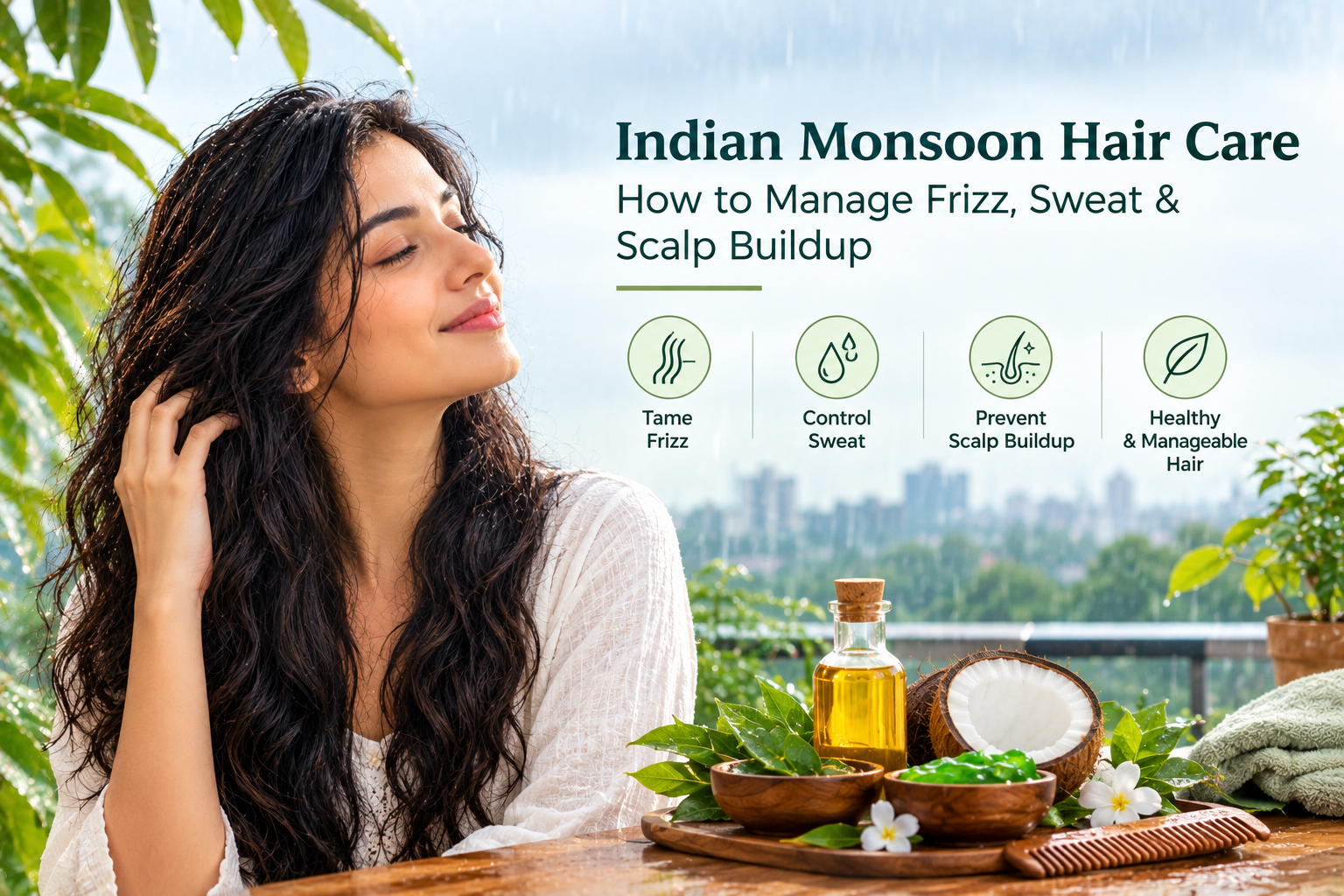
Indian Monsoon Hair Care: How to Manage Frizz, Sweat & Scalp Buildup
Is monsoon, is your hair becoming frizzy, sweaty and difficult to manage?
The Indian monsoon can completely change how your hair and scalp feel. Increased humidity, frequent sweating, rainwater exposure and changing weather conditions can make hair look puffier, feel heavier and become harder to style.
For many people, the biggest monsoon hair concerns include frizz, oily roots, scalp buildup, tangled hair and a feeling that the hair never looks as fresh as it did after washing.
But monsoon hair care does not have to become complicated.
With the right cleansing habits, suitable conditioning, gentle hair handling and a simple routine, you can make your hair care routine easier to manage throughout the rainy season.
The key is not to fight the weather with excessive styling products or frequent heat styling. Instead, understand what your hair and scalp need during humid conditions and build a routine that you can realistically follow.
1. Understand Why the Indian Monsoon Can Make Hair Difficult to Manage
Have you noticed that your hair looks smooth after styling but becomes frizzy again soon after stepping outside?
Humidity can change the way hair looks and feels, particularly for people with naturally wavy, curly, dry or porous hair.
At the same time, increased sweating can make the scalp feel oily or uncomfortable. Dust, natural scalp oils and hair products may also contribute to a heavier feeling around the roots.
These seasonal changes can make your normal hair care routine feel less effective.
The first step towards better monsoon hair care is understanding that your routine may need to change with the weather.
Instead of repeatedly brushing, straightening or applying more styling products, focus on cleansing the scalp appropriately, conditioning the hair and reducing unnecessary friction.
2. Keep Your Scalp Clean Without Over-Washing
Does your scalp feel sweaty or greasy shortly after washing?
During humid monsoon days, sweat, natural oils, dust and styling product residue can accumulate more easily around the scalp.
Regular cleansing can help your scalp feel fresh and comfortable, but more washing does not automatically mean better hair care.
Excessive washing or a harsh shampoo may leave the hair feeling dry, rough or uncomfortable.
Choose a cleansing routine according to your individual scalp and hair needs. Focus the shampoo primarily on the scalp instead of aggressively scrubbing the lengths.
Clean your scalp when it needs cleansing, but avoid excessive washing that may leave your hair feeling unnecessarily dry.
The goal is a balanced routine that removes everyday buildup while keeping the overall hair care experience comfortable.
3. Take Control of Frizzy Hair During Humid Weather
Frizz can be one of the most frustrating parts of Indian monsoon hair care.
You may spend time brushing or styling your hair, only to find that humidity quickly changes its appearance.
Instead of repeatedly correcting frizz with a brush or heat styling tool, focus on reducing friction and maintaining suitable conditioning.
After washing, use a suitable conditioner according to your hair type. When drying your hair, avoid aggressively rubbing it with a towel.
A soft towel or microfiber towel can help absorb excess water more gently.
Try to handle wet hair carefully because wet hair can be more vulnerable to pulling and unnecessary friction.
For frizzy hair in India, gentle handling, suitable conditioning and reduced friction can make your routine easier to maintain during humid weather.
4. Manage Sweat and Scalp Buildup Before It Becomes a Routine Problem
Does your scalp sometimes feel heavy, greasy or uncomfortable during the monsoon?
Sweat can increase when the weather is warm and humid. When sweat mixes with natural oils, dust and styling products, your scalp may feel like it needs more attention.
Take a look at your current hair care routine.
Are you applying too many products near the roots? Are you using heavy oils or styling products even when your scalp already feels oily?
Simplifying your routine may make your hair feel more manageable.
Avoid applying excessive oils, creams or styling products directly onto the scalp unless they are appropriate for your individual needs.
A clean and comfortable scalp can make it easier to maintain manageable hair throughout the monsoon.
5. Avoid Going to Bed With Wet Hair
After a rainy day or evening hair wash, it can be tempting to leave your hair damp and go straight to bed.
But wet hair can be more difficult to manage, and sleeping with soaking-wet hair may increase friction between your hair and pillow.
After washing, gently remove excess water and allow your hair to dry comfortably before sleeping.
You do not need to use excessive heat simply to speed up the process. Whenever possible, allow your hair to dry naturally or use a gentle drying method suitable for your hair type.
Making sure your hair is comfortably dry before bedtime is a simple habit that can make your monsoon hair routine easier.
6. Choose Hair Products According to Your Hair Type
One product or routine cannot work exactly the same way for every person.
Straight, wavy, curly, thick, fine, dry and oily hair can all have different requirements.
If your hair becomes greasy quickly during the monsoon, you may prefer lighter products and avoid unnecessary layering.
If your hair tends to feel dry or frizzy, suitable conditioning and lightweight moisturising care may help improve manageability.
Natural ingredients can certainly be part of a personal hair care routine, but a natural label alone does not guarantee that a product will suit everyone.
Choose your hair care products according to your scalp, hair texture and individual needs rather than simply following a product trend.
7. Reduce Excessive Heat Styling During the Monsoon
Are you repeatedly using a straightener or blow-dryer because humidity keeps bringing your frizz back?
Constantly correcting monsoon frizz with heat can make your routine more complicated and may leave hair feeling dry or rough.
Instead, consider hairstyles that work with your natural hair texture.
If you do need to use heat styling, use an appropriate heat-protection product and avoid unnecessarily high temperatures.
Give your hair a break from repeated styling whenever possible.
The goal is not perfectly styled hair every day. The goal is hair that feels manageable and comfortable with less unnecessary stress.
8. Build a Simple Weekly Monsoon Hair Care Routine
A complicated routine is difficult to maintain when your hair needs can change with the weather.
Instead, create a simple routine that gives you clear steps for wash days and the days between washes.
Wash Day
Cleanse Scalp → Condition Hair → Gently Dry → Detangle Carefully
Focus on cleansing the scalp without aggressively scrubbing the hair lengths.
Use conditioner according to your hair type and gently remove excess water before drying.
Between Washes
Refresh → Detangle Gently → Avoid Excessive Product Layering
If your scalp becomes sweaty, adjust your cleansing schedule according to your individual needs.
You do not have to follow exactly the same schedule throughout the year.
The best monsoon hair care routine is one that is simple, comfortable and realistic enough to follow consistently.
9. Avoid Common Indian Monsoon Hair Care Mistakes
Sometimes, improving your routine is less about adding new products and more about avoiding unnecessary habits.
Avoid repeatedly brushing frizzy hair throughout the day because excessive brushing can make the hair appear more unruly.
Do not apply large amounts of oil or styling products simply because your hair feels dry.
Avoid tying wet hair tightly, particularly when the hair is still wet.
Try not to leave sweat and product buildup on the scalp for unnecessarily long periods.
Most importantly, avoid changing several products at the same time.
If you introduce multiple new products together, it becomes difficult to understand how your hair responds to each one.
Simple habits, gentle handling and consistent cleansing can be more useful than constantly changing your hair care routine.
10. Create a Monsoon Hair Care Routine You Can Actually Maintain
The best routine is not necessarily the longest one.
Your monsoon hair care routine should fit your lifestyle, hair texture and scalp needs.
A practical routine can be as simple as cleansing when your scalp needs it, conditioning the hair lengths, gently drying your hair and reducing unnecessary heat styling.
If your hair becomes particularly frizzy, focus on suitable conditioning and gentle handling rather than repeatedly trying to straighten it.
If your scalp becomes oily quickly, review your cleansing frequency and reduce unnecessary product application around the roots.
If your hair feels dry, focus on suitable conditioning and avoid harsh cleansing.
Know Your Hair → Cleanse the Scalp → Condition the Lengths → Reduce Friction → Manage Frizz → Stay Consistent.
The goal is not to create a complicated ten-step monsoon routine.
The goal is to create a routine that helps your hair and scalp feel comfortable while fitting naturally into your everyday lifestyle.
The Kitchen Factory believes that naturally inspired personal care can become a practical part of everyday hair care when products and routines are selected according to individual needs.
Explore Natural Hair Care at The Kitchen Factory
Your Everyday Indian Monsoon Hair Care Formula
Regular Wash Day
Gentle Cleanse → Condition → Gently Dry → Detangle
Frizz-Prone Hair
Gentle Cleanse → Hydrate → Condition → Reduce Heat Styling
Oily or Sweaty Scalp
Scalp Cleanse → Lightweight Care → Avoid Excessive Product Buildup
Dry or Rough Hair
Gentle Cleanse → Conditioning → Gentle Drying → Minimal Heat
Keep your scalp clean according to your individual needs.
Avoid excessive shampooing.
Condition your hair lengths appropriately.
Handle wet hair gently.
Reduce unnecessary heat styling.
Avoid excessive product layering.
Do not go to bed with soaking-wet hair.
Introduce new products gradually.
The Kitchen Factory believes that hair care should be practical, mindful and easy to maintain throughout changing seasons.
With a suitable cleansing routine, gentle hair handling, appropriate conditioning and consistent scalp care, you can create a simple monsoon hair care routine designed around the unique challenges of Indian weather.