
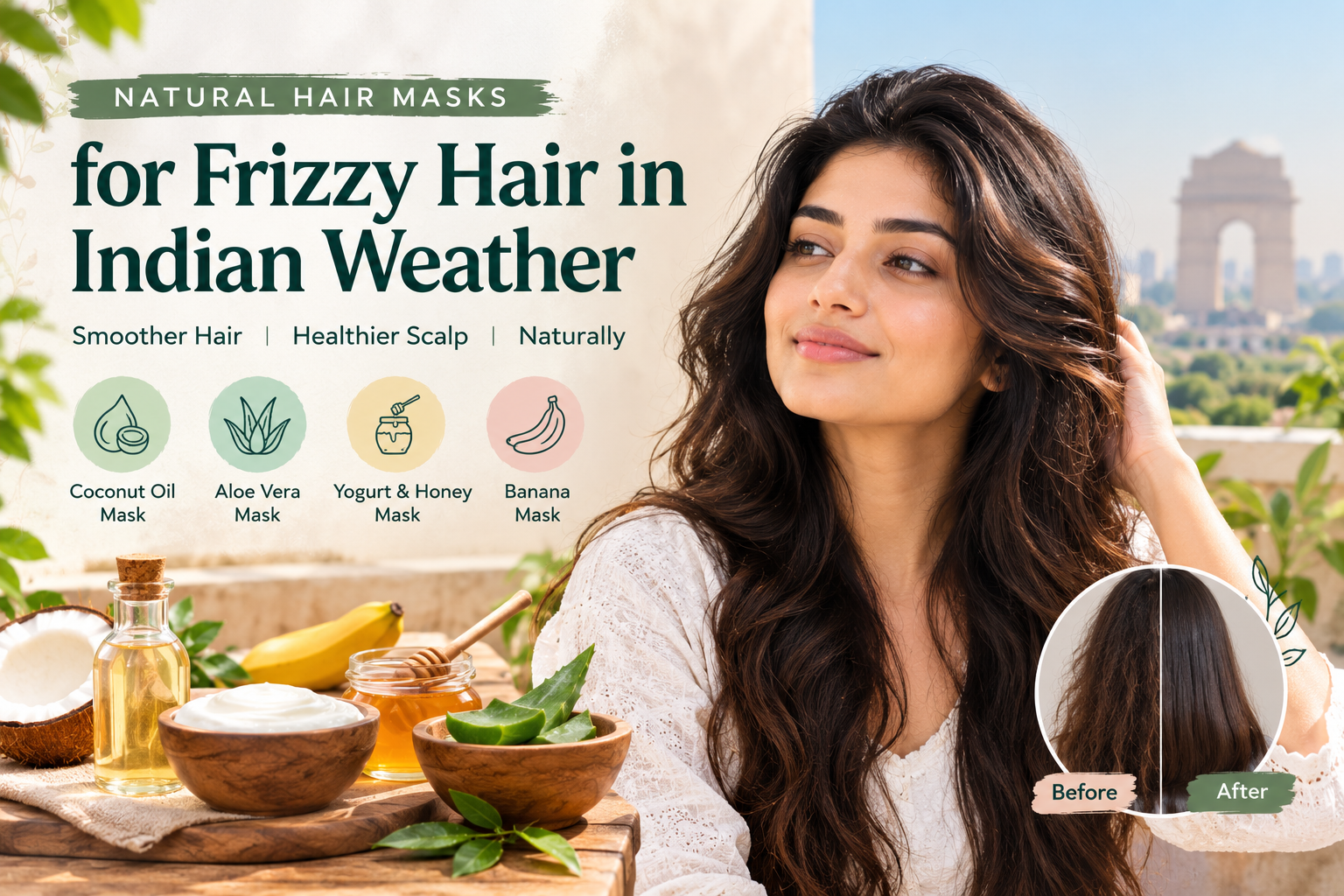
Does your hair become rough, puffy, or difficult to manage whenever the weather changes? Frizzy hair is a common concern in India, where humid monsoons, intense summer heat, dry winter air, dust, and frequent exposure to pollution can make hair care challenging. Even after shampooing and conditioning, your hair may still look unruly, lose its smooth appearance, or develop unwanted flyaways.
The good news is that you do not always need an expensive salon treatment to improve the appearance and manageability of frizzy hair. A suitable hair mask, gentle cleansing, regular conditioning, and a few healthy hair care habits can help make your hair feel softer and easier to manage. At The Kitchen Factory, we believe that simple, thoughtful personal care can help you build a hair care routine that suits your everyday lifestyle.
Why Does Hair Become Frizzy in Indian Weather?
Frizz occurs when individual hair strands become uneven, rough, or difficult to align smoothly. Hair that is dry or damaged is often more prone to frizz because its outer protective layer may be less effective at keeping the hair surface smooth.
Humidity can also affect how hair behaves. In humid weather, hair absorbs moisture from the surrounding air, which can cause some hair types to swell or change shape. During dry weather, hair may feel rough, brittle, or more prone to static and breakage.
Frequent heat styling, harsh shampoos, excessive brushing, chemical treatments, and rough towel-drying can further contribute to frizz. Understanding these factors can help you choose a hair mask and daily routine that support softer, more manageable hair throughout the year.
1. Coconut Oil Hair Mask for Dry, Frizzy Hair
Coconut oil is a popular ingredient in traditional Indian hair care routines. Research suggests that coconut oil can penetrate the hair shaft and may help reduce protein loss when used appropriately before or after washing. This can be useful for maintaining the condition of hair that is prone to dryness and breakage.
How to use it: Take a small amount of coconut oil and warm it gently between your palms. Apply it mainly to the lengths and ends of your hair. Leave it on for approximately 20–30 minutes before washing with a suitable shampoo.
If your hair is very dry, you may find that a small amount helps improve softness and manageability. However, you do not need to use large quantities or leave oil on overnight to benefit from conditioning.
Choose an amount that suits your hair texture and wash it out thoroughly. If you have a scalp condition or find that oils make your scalp itchy or greasy, avoid applying the oil directly to your scalp.
2. Aloe Vera Hair Mask for a Lightweight Conditioning Routine
Aloe vera is widely used in personal care products because of its water content and soothing properties in suitable formulations. An aloe-based hair product may help improve the feel of your hair and make it easier to manage, although evidence for homemade aloe vera masks as a specific treatment for frizz is limited.
How to use it: Choose an aloe vera gel or hair mask specifically formulated for hair use. Apply a small amount to damp hair according to the product instructions, focusing on the lengths rather than the roots if your hair becomes oily easily.
Allow the product to remain on your hair for the recommended time, then rinse if required. Follow with a suitable conditioner if your hair needs additional softness.
Aloe vera is not a guaranteed solution for frizz, and natural ingredients can still irritate some people. Patch-test new products and discontinue use if you notice itching, redness, or discomfort.
3. Yogurt and Honey Hair Mask for Softer-Looking Hair
Yogurt and honey are commonly used in homemade beauty routines. Honey is a humectant, meaning it can attract and retain moisture under suitable conditions. Yogurt provides a creamy texture, but there is limited scientific evidence that a homemade yogurt and honey mask can repair damaged hair or permanently control frizz.
How to use it: If you wish to try this traditional hair care option, mix one tablespoon of plain yogurt with one teaspoon of honey until smooth. Apply a small amount to the lengths of damp hair, avoiding the eyes and any irritated areas of the scalp.
Leave the mixture on for around 10–15 minutes, then rinse thoroughly and shampoo if needed. Follow with conditioner to help detangle your hair.
Use this mask occasionally rather than assuming that frequent application will produce better results. Avoid it if you have an allergy or sensitivity to any ingredient, and remember that food-based mixtures can be messy and may not suit every hair type.
4. Banana Hair Mask for Dry Hair Lengths
Bananas are sometimes included in homemade hair masks because their soft texture makes them easy to mix into conditioning treatments. However, there is limited clinical evidence that banana masks specifically reduce frizz or repair damaged hair.
How to use it: If you want to try a homemade option, blend a small amount of ripe banana until completely smooth. Apply a thin layer to the lengths and ends of damp hair, avoiding the scalp if you are prone to buildup.
Leave it on for approximately 10 minutes, then rinse very thoroughly. Any remaining fruit particles can become difficult to remove, so blend the mixture carefully and avoid using it if you cannot rinse it out easily.
For a simpler and more predictable result, a commercially formulated hair mask may be easier to use. Products designed for hair are generally formulated for easier application, rinsing, and conditioning.
5. Choose a Conditioner-Rich Hair Mask for Humid Weather
Indian monsoon weather can be particularly challenging for people with naturally wavy, curly, or dry hair. High humidity may encourage hair to swell and lose its smooth appearance, while frequent washing and styling can leave the lengths feeling dry.
During humid weather, choose a hair mask formulated to condition your hair without leaving excessive residue. Ingredients such as cationic conditioning agents, certain silicones, and fatty alcohols are commonly used in hair products to improve smoothness, reduce friction, and make detangling easier.
Apply the mask according to its instructions, usually concentrating on the mid-lengths and ends. Rinse thoroughly if the product is designed to be rinsed out.
A suitable conditioner or mask can improve the appearance of frizz, but it cannot permanently change your hair’s natural texture. The right formulation will depend on whether your hair is fine, thick, curly, colour-treated, or chemically processed.
6. Follow a Gentle Hair Washing Routine
Even a good hair mask may not provide the results you want if your daily washing habits leave your hair excessively dry. Harsh cleansing, very hot water, and vigorous rubbing can increase roughness and make hair harder to manage.
Choose a shampoo suited to your scalp and hair type. Cleanse the scalp gently with your fingertips rather than scratching with your nails, and allow the shampoo to rinse through the lengths without repeatedly scrubbing them.
After shampooing, apply conditioner to the lengths and ends. Use your fingers or a wide-tooth comb to detangle carefully, starting at the ends and working upwards.
After washing, gently squeeze out excess water with a soft towel or cotton T-shirt. Avoid rubbing your hair aggressively, as wet hair is more vulnerable to damage.
7. Reduce Heat Styling and Protect Your Hair
Frequent use of straighteners, curling irons, and high-heat blow dryers can damage the hair shaft and increase roughness over time. Damaged hair may be more difficult to smooth and more prone to breakage.
Whenever possible, let your hair air-dry partially before styling. If you use a blow dryer, select a moderate or low heat setting and keep it moving rather than directing intense heat at one area for too long.
Use a suitable heat-protectant product before heat styling, following the manufacturer’s directions. Heat protection may reduce damage but does not eliminate it completely.
Also consider protective hairstyles that do not pull tightly on the roots. Small adjustments to your styling routine can help preserve hair condition and reduce the appearance of frizz.
8. Adapt Your Hair Care Routine to Each Season
Your hair may need different care throughout the year. During humid monsoon months, lightweight conditioning products and careful styling may help keep hair more manageable. In winter, when the air is drier, you may prefer a richer conditioner or a nourishing mask for dry lengths.
During summer, sweat and dust may make scalp cleansing more important, but excessive washing with harsh products can contribute to dryness. Choose your washing frequency according to your scalp’s needs rather than following a fixed schedule.
Protect your hair from prolonged sun exposure when practical, and rinse away sweat or environmental residue when needed. Avoid introducing several new products at once, so you can identify which products work best for your hair.
Consistency matters more than using a different mask for every weather change. A gentle shampoo, appropriate conditioner, occasional hair mask, and careful handling provide a practical foundation for year-round hair care.
Build a Simple Routine for Smooth, Manageable Hair
You do not need to try every homemade recipe to care for frizzy hair. Begin with a shampoo suited to your scalp, a conditioner designed for your hair type, and a hair mask used according to its instructions when extra conditioning is needed.
For dry lengths, a small amount of a suitable hair oil may help improve softness. For humid weather, choose products that control friction and make your hair easier to style without excessive buildup.
Pay attention to how your hair responds. If a mask makes your hair feel heavy, sticky, or difficult to rinse, reduce the amount or choose a different formulation. If your scalp develops persistent itching, redness, scaling, or unusual hair loss, consult a qualified dermatologist.
Enjoy Softer, More Manageable Hair in Every Season
Frizzy hair is a common concern in India’s changing weather, but thoughtful hair care can make a meaningful difference to how your hair feels and looks. Coconut oil, suitable conditioning masks, gentle cleansing, reduced heat styling, and season-appropriate care can all play a role in maintaining manageable hair.
Remember that natural ingredients are not automatically more effective or safer than formulated hair care products. Choose options that suit your hair type, avoid ingredients that irritate your skin, and focus on consistent care rather than expecting a single mask to deliver permanent results.
At The Kitchen Factory, we encourage simple, informed personal care choices that fit into everyday life. Explore suitable hair care essentials and build a routine that supports softer, smoother-looking hair throughout India’s changing seasons.
Start today: choose a suitable conditioner, handle wet hair gently, and try a hair mask that matches your hair’s needs. With regular care and realistic expectations, you can make frizzy hair easier to manage in Indian weather.