
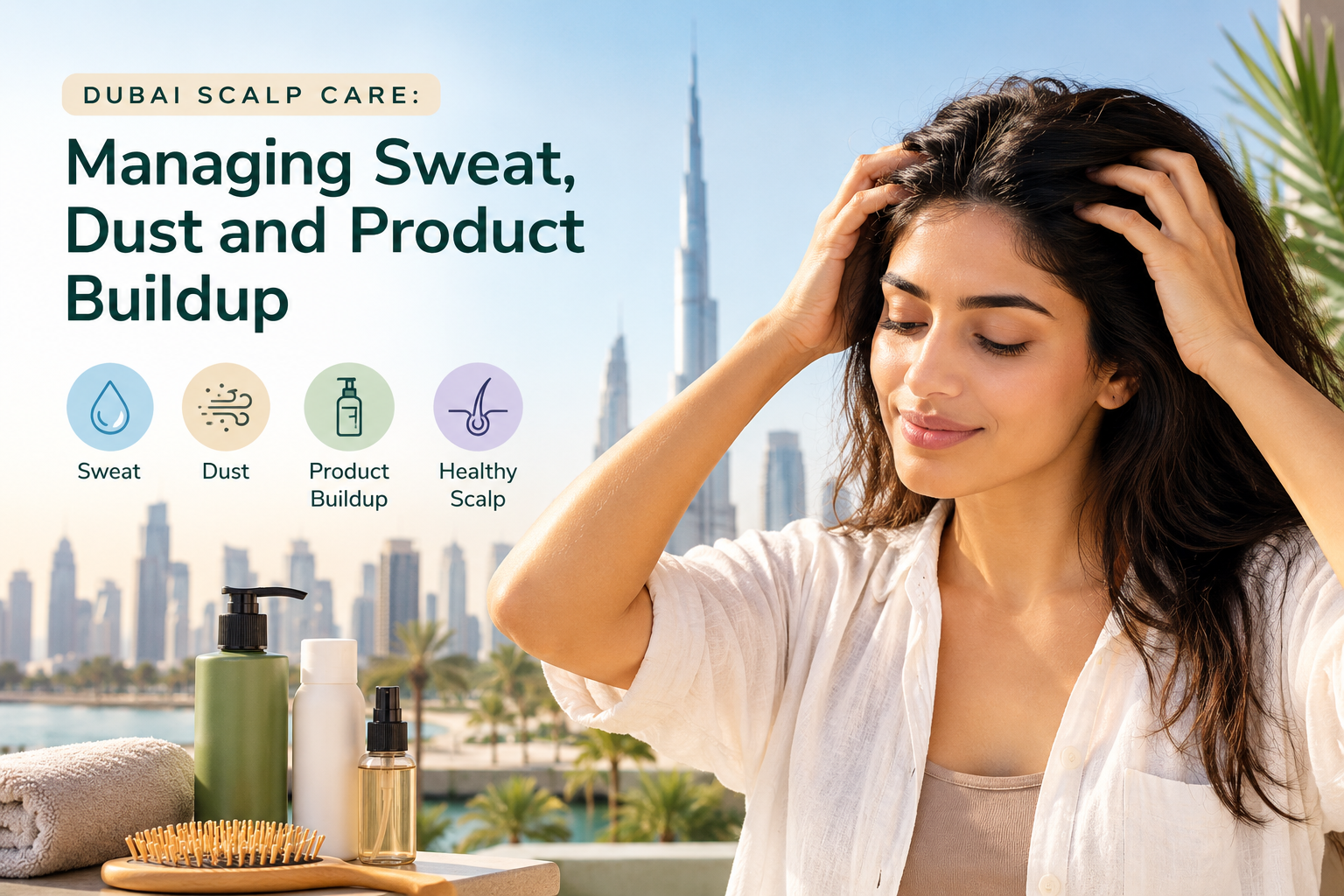
Living in Dubai comes with plenty of lifestyle benefits, but the hot weather, humidity, airborne dust, and frequent use of hair styling products can make scalp care more challenging. Whether you commute outdoors, exercise regularly, spend time at the beach, or move between warm outdoor conditions and air-conditioned spaces, your scalp may need extra attention.
Sweat, excess oil, environmental dust, and residue from shampoos, conditioners, gels, and styling sprays can collect on the scalp. When your cleansing routine does not suit your needs, your hair may feel greasy, heavy, or less fresh than usual. You may also notice itching or flakes, although these symptoms can have several causes.
The good news is that a simple, consistent scalp care routine can help you manage buildup and keep your scalp feeling clean and comfortable throughout the year. Here is how to build a practical scalp care routine for Dubai’s climate.
Why Does Dubai’s Climate Make Scalp Care Important?
Dubai experiences hot weather for much of the year, while humidity levels can vary by season and location. These conditions may influence how much you sweat and how quickly your scalp feels oily. Dust and sand can also settle on your hair and scalp during outdoor activities.
Indoor air conditioning adds another consideration. Moving between outdoor heat and cool indoor environments can change how your hair feels, while frequent washing or harsh cleansing products may leave the scalp feeling dry or uncomfortable.
Several everyday factors can contribute to scalp buildup:
- Sweat: Sweat can mix with oil and residue on the scalp, making your hair feel less fresh.
- Dust and pollution: Particles from the surrounding environment can settle on your hair and scalp.
- Hair styling products: Gels, waxes, dry shampoos, oils, and sprays may leave residue when not thoroughly removed.
- Excess oil: Natural scalp oils can combine with sweat and product residue, especially between washes.
- Inconsistent cleansing: Washing too infrequently may allow buildup to accumulate, while overly aggressive washing can cause dryness and irritation.
Understanding these factors makes it easier to choose a routine that cleans effectively without unnecessarily irritating your scalp.
1. Choose a Shampoo That Suits Your Scalp
One of the most important steps in managing sweat and dust is choosing the right shampoo. A gentle, effective cleanser can remove everyday dirt, excess oil, sweat, and styling residue without leaving your scalp feeling excessively dry.
If your scalp becomes oily quickly, you exercise frequently, or you spend several hours outdoors, you may need to wash your hair more often than someone with a dry scalp. Let your scalp condition, activity level, and hair type guide your routine rather than following a fixed schedule.
When washing, concentrate the shampoo on your scalp instead of rubbing the lengths of your hair aggressively. Massage gently with your fingertips, rinse thoroughly, and avoid scratching with your nails.
If you use heavy styling products, an occasional clarifying shampoo may help remove stubborn residue. Follow the product instructions and avoid overusing strong cleansers, particularly if your scalp is sensitive or your hair is dry or chemically treated.
2. Clean Your Scalp After Heavy Sweating
Outdoor walks, gym sessions, cycling, and other physical activities can leave sweat on your scalp. You do not necessarily need a full shampoo after every light workout, but leaving heavy sweat and product residue in your hair for long periods may make your scalp feel uncomfortable.
After significant sweating, consider rinsing your scalp with water or washing with a suitable gentle shampoo when needed. If you wash your hair frequently, choose a formula that does not leave your scalp feeling tight or irritated.
Allow your scalp to dry properly after washing. If your hair remains damp for long periods, especially beneath a cap or helmet, it may feel uncomfortable. Use a clean towel and avoid tying wet hair tightly for extended periods.
Dubai scalp care tip: Keep a clean towel and a breathable cap or head covering available when your daily routine involves outdoor activity. Wash hats and helmet liners regularly according to their care instructions.
3. Remove Dust Without Scrubbing Harshly
Dust and sand can settle on your hair during outdoor travel, desert excursions, construction-area commutes, and windy conditions. It can be tempting to scrub your scalp vigorously, but aggressive rubbing may irritate the skin and damage fragile hair.
Instead, gently shake or brush loose particles from your hair before washing, using a brush suitable for your hair type. Then rinse with lukewarm water and shampoo the scalp when necessary. Rinse carefully so that cleanser and loosened residue do not remain behind.
If your hair is curly, textured, or prone to tangling, handle it gently and detangle it with an appropriate comb or brush. Avoid rough brushing when hair is wet and especially fragile.
After dusty outdoor activities, changing your pillowcase and cleaning hair accessories can also help reduce the transfer of dirt and oils back onto freshly washed hair.
4. Manage Buildup From Oils, Gels, and Styling Products
Hair oils, leave-in conditioners, gels, waxes, and sprays can be useful for styling and managing dry hair. However, applying too much product or layering several formulas can make the scalp feel coated and the hair appear greasy.
To keep product buildup under control, apply styling products in the amounts recommended on their labels. Whenever possible, apply conditioners and leave-in products mainly to the hair lengths rather than directly to the scalp, unless the product is specifically designed for scalp use.
Consider these simple habits:
- Use only the amount of styling product you need.
- Cleanse thoroughly after using products that leave a heavy residue.
- Avoid repeatedly adding dry shampoo to hair without washing it as directed.
- Wash combs, brushes, and reusable hair accessories regularly.
- Check product labels and stop using a product if it causes itching, burning, or irritation.
Clarifying products may be useful occasionally for persistent residue, but more cleansing is not always better. If your scalp becomes dry or irritated, reduce harsh treatments and reassess the products you use.
5. Keep Your Scalp Comfortable and Hydrated
A clean scalp should not feel painfully tight, burning, or excessively dry after washing. If your scalp feels uncomfortable, your shampoo may be too harsh, you may be washing too aggressively, or another scalp condition may be contributing.
Choose gentle hair care products and avoid applying undiluted essential oils, lemon juice, baking soda, or other harsh home remedies directly to your scalp. These ingredients can irritate the skin and are not necessary for routine scalp cleansing.
If you have a dry scalp, consider whether your cleansing frequency and product choices are appropriate for your hair type. A conditioner can help protect the lengths of your hair, while a scalp-specific moisturising product may be an option if it is formulated for your needs.
Remember that dandruff, persistent itching, redness, and flaking are not always caused by simple buildup. If symptoms continue despite gentle care, consult a dermatologist or qualified healthcare professional for advice.
6. Build a Simple Weekly Scalp Care Routine
A routine does not need to be complicated to be effective. Consistency and choosing products that suit your scalp are more useful than constantly switching between treatments.
- On regular days: Check how your scalp feels and wash according to your oil level, activity, and hair type.
- After heavy sweating: Rinse or shampoo as needed, and let your scalp dry properly.
- After dusty outdoor activities: Remove loose particles gently and cleanse when necessary.
- When using styling products: Use moderate amounts and remove residue with appropriate cleansing.
- Once in a while, if needed: Consider a suitable clarifying shampoo when ordinary washing does not remove product buildup.
- Every week: Clean brushes, combs, and frequently used hair accessories.
Adjust the routine as Dubai’s weather, your schedule, and your scalp condition change. Someone who exercises daily may need a different washing schedule from someone who spends most of the day indoors.
7. Everyday Habits That Support a Healthier Scalp
Good scalp care also depends on small habits outside the shower. Drink water regularly throughout the day, particularly when spending time in the heat, and protect yourself from excessive sun exposure. A breathable hat can provide shade outdoors, while regular cleaning helps keep headwear comfortable.
Avoid sharing combs, brushes, hats, or towels, especially if someone has an active scalp infection or unexplained irritation. Change pillowcases regularly and clean hair tools to prevent accumulated oils and product residue from transferring back to your hair.
Pay attention to changes in your scalp rather than relying only on how your hair looks. Persistent itching, thick scaling, painful bumps, sores, or unusual hair loss deserve professional assessment rather than repeated home treatments.
Conclusion: Keep Your Dubai Scalp Care Routine Simple
Managing sweat, dust, and product buildup in Dubai starts with understanding your scalp and responding to its needs. Gentle cleansing, thorough rinsing, careful use of styling products, and regular cleaning of hair accessories can help keep your scalp feeling fresh and comfortable.
You do not need an expensive or complicated routine. Choose suitable products, avoid harsh scrubbing, and adjust your washing schedule to your activity level and scalp condition. If irritation or persistent flaking continues, seek professional guidance to identify the cause.
Explore The Kitchen Factory’s range of personal care products and choose options that fit your everyday self-care routine. Read product labels, check suitability for your needs, and focus on consistent care rather than quick fixes.