
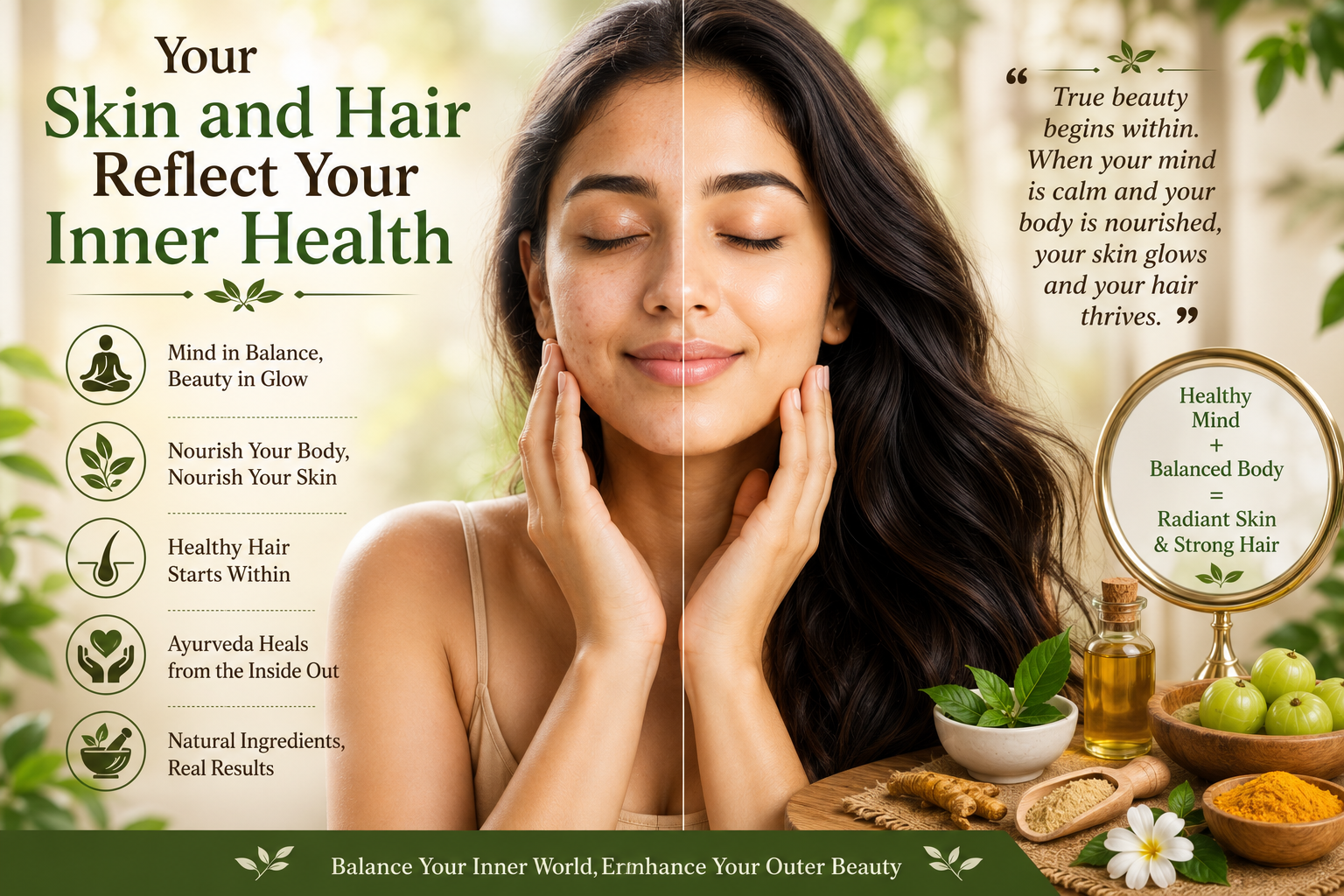
Have you ever noticed that your skin suddenly looks dull before an important meeting? Or perhaps your hair fall increases during stressful phases of life? While many people blame pollution, weather changes, or unsuitable skincare products, Ayurveda believes that true beauty begins from within. Your skin and hair often reveal what is happening inside your body and mind.
According to Ayurveda, the skin (Twak) and hair (Kesha) are reflections of your overall health. When your mind experiences constant stress, your body’s natural balance is disturbed. Modern science supports this concept by explaining that chronic stress increases cortisol—the body’s primary stress hormone. Elevated cortisol affects digestion, immunity, hormone balance, sleep quality, and blood circulation, all of which eventually influence your skin and hair health.
Instead of treating only the visible symptoms, Ayurveda focuses on addressing the root cause by restoring balance to the body, mind, and lifestyle. Understanding how stress affects your appearance is the first step toward achieving naturally healthy skin and stronger hair.
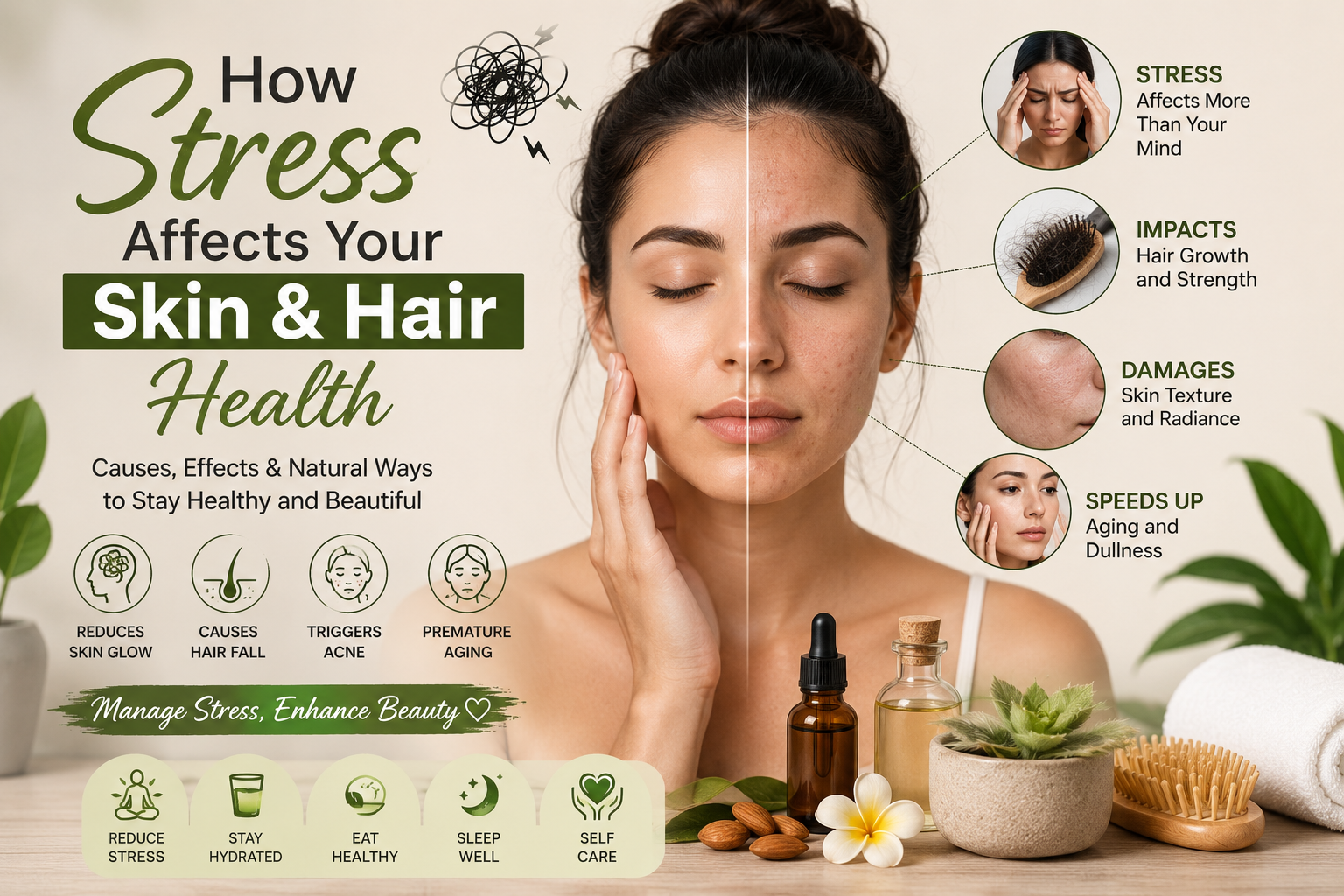
1. Hormonal Imbalance Disrupts Healthy Skin
One of the earliest effects of chronic stress is hormonal imbalance. Whenever your body experiences emotional or physical stress, cortisol production increases. High cortisol levels stimulate excess oil production, making the skin more susceptible to clogged pores, acne breakouts, and inflammation. At the same time, the skin’s natural protective balance becomes disturbed, causing uneven texture and sensitivity.
Ayurveda explains this through the aggravation of Vata and Pitta Doshas. Excess Pitta increases heat and inflammation, while aggravated Vata causes dryness and instability within the skin. Together, these dosha imbalances contribute to acne, redness, irritation, excessive oiliness, and an uneven complexion.
- Increases excess oil production.
- Triggers frequent acne breakouts.
- Causes skin inflammation and redness.
- Leads to uneven skin texture.
- Reduces the skin’s natural balance.
2. Your Natural Glow Begins to Fade
Healthy, glowing skin depends on proper blood circulation and continuous nourishment. During periods of prolonged stress, blood flow is redirected toward essential organs, leaving the skin with fewer nutrients and less oxygen. As a result, the complexion gradually appears dull, tired, and lifeless.
Ayurveda associates radiant skin with healthy Rasa Dhatu, the body’s nourishing fluid responsible for supplying nutrients to every tissue. When stress weakens digestion and nutrient absorption, the quality of Rasa Dhatu declines, causing the skin to lose its natural brightness and vitality.
Supporting your body with nutritious foods, adequate hydration, sufficient rest, and Ayurvedic skincare ingredients can help restore your skin’s healthy glow over time while improving overall wellbeing.
3. The Skin Barrier Becomes Weak
Your skin barrier acts as the body’s first line of defence against pollution, harmful bacteria, allergens, and moisture loss. When you’re under prolonged stress, elevated cortisol levels weaken this protective barrier, making your skin more vulnerable to external damage. As the barrier function declines, moisture escapes more easily, leaving the skin dry, rough, and easily irritated.
According to Ayurveda, excessive stress aggravates the Vata Dosha, which naturally increases dryness and reduces the skin’s ability to retain hydration. This imbalance often causes redness, itching, sensitivity, and a feeling of tightness after cleansing. A weakened skin barrier also makes it difficult for the skin to recover from everyday environmental stress.
- Causes dryness and dehydration.
- Increases skin sensitivity.
- Weakens the skin’s natural protective barrier.
- Leads to redness and irritation.
- Makes the skin more prone to environmental damage.
Explore Natural Ayurvedic Skincare Products
4. Stress Speeds Up Premature Skin Ageing
Chronic stress does much more than affect your mood—it also accelerates the skin’s ageing process. High cortisol levels gradually break down collagen and elastin, the proteins responsible for keeping your skin firm, smooth, and youthful. As collagen production declines, the skin begins to lose its elasticity, making fine lines and wrinkles appear earlier than expected.
In Ayurveda, excessive mental and emotional stress is believed to reduce Ojas, the body’s vital life essence that supports immunity, vitality, healthy ageing, and radiant skin. When Ojas becomes depleted, the skin appears tired, less resilient, and lacks its natural glow.
Managing daily stress through proper sleep, balanced nutrition, mindfulness, and Ayurvedic self-care practices helps preserve collagen, maintain skin elasticity, and promote naturally youthful-looking skin over the long term.
5. Healing Takes Longer Than Usual
Have you ever noticed that acne marks, blemishes, or small cuts take much longer to heal during stressful periods? This happens because stress weakens the body’s natural repair mechanisms. Reduced blood circulation and impaired immune function slow down tissue regeneration, making it difficult for the skin to recover efficiently.
Ayurveda explains that when the body’s internal balance is disturbed, nourishment does not reach the tissues effectively. As a result, damaged skin cells regenerate more slowly, allowing acne scars, pigmentation, and blemishes to remain visible for a longer period.
- Acne scars fade more slowly.
- Cuts and blemishes require more time to heal.
- Skin repair and regeneration become less efficient.
- Inflammation remains for a longer duration.
- The complexion appears dull and unhealthy.
How Stress Affects Hair Health
Healthy, thick, and shiny hair depends on proper nourishment, balanced hormones, and a healthy scalp. When your body experiences prolonged stress, these essential processes become disrupted. Both Modern Science and Ayurveda recognise that chronic stress directly impacts the hair growth cycle, weakens the roots, and affects scalp health. If left unmanaged, stress can gradually reduce hair density and make your hair appear dull, lifeless, and fragile.
1. Increased Hair Fall
One of the earliest signs of chronic stress is excessive hair shedding. High levels of cortisol push a large number of hair follicles into the resting phase, a condition commonly known as Telogen Effluvium. After several weeks or even months of continuous stress, these resting hair follicles begin to shed rapidly, resulting in noticeable hair fall during washing, brushing, or styling.
Ayurveda explains that excessive stress aggravates both Vata and Pitta Doshas. This imbalance weakens the nourishment reaching the hair roots and gradually affects overall hair strength.
- Sudden increase in daily hair fall.
- Hair appears thinner than before.
- Hair sheds easily during combing or washing.
- Reduced hair volume over time.
2. Weak Hair Roots
During stressful periods, digestion and nutrient absorption often become less efficient. Even if you consume a healthy diet, your body may struggle to deliver essential nutrients to the scalp and hair follicles. This weakens the hair roots and makes each strand more vulnerable to damage.
According to Ayurveda, weakened Agni (Digestive Fire) reduces the nourishment available to the body’s tissues. Since healthy hair depends on proper nutrition, poor digestion eventually leads to brittle, dry, and weak hair.
- Hair roots become weaker.
- Hair breaks easily.
- Reduced hair strength.
- Loss of natural shine.
Shop Natural Hair & Skin Care Products
3. Slower Hair Growth
When the body remains under continuous stress, its primary focus shifts toward supporting essential organs rather than promoting hair growth. As a result, fewer nutrients and less oxygen reach the hair follicles, slowing the natural hair growth cycle. Hair may continue to grow, but at a much slower rate than usual.
Ayurveda believes that balanced nutrition, proper digestion, quality sleep, and emotional wellbeing are essential for maintaining healthy hair growth. Restoring internal balance naturally supports stronger and healthier hair over time.
4. Scalp Imbalance
Stress affects everyone’s scalp differently. Some individuals experience excessive oil production, while others struggle with dryness, itching, dandruff, or irritation. These changes disturb the scalp’s natural environment, making it difficult for healthy hair to grow.
In Ayurveda, excessive oiliness is generally linked with an aggravated Pitta Dosha, whereas dryness and flakiness are associated with an aggravated Vata Dosha. Maintaining dosha balance helps create a healthier scalp environment.
- Oily or excessively dry scalp.
- Dandruff and itching.
- Scalp irritation and discomfort.
- Unhealthy hair growth conditions.
5. Premature Greying
Long-term emotional stress increases oxidative stress, which damages the pigment-producing cells responsible for maintaining your natural hair colour. Over time, this can contribute to the early appearance of grey hair, even at a young age.
Ayurveda has traditionally associated premature greying with an aggravated Pitta Dosha, particularly when combined with poor lifestyle habits, irregular sleep, unhealthy eating patterns, and chronic emotional stress. Managing stress naturally helps support healthy pigmentation and overall hair vitality.
Stress Can Trigger Existing Skin Conditions
Stress doesn’t only create new skin problems—it often makes existing skin conditions worse. When cortisol levels remain elevated for a prolonged period, inflammation increases throughout the body, making the skin more reactive and sensitive. This is why many people notice sudden flare-ups during emotionally challenging phases of life.
According to Ayurveda, an imbalance in the Vata and Pitta Doshas weakens the body’s natural healing ability and disturbs skin health. Maintaining emotional balance is just as important as following a proper skincare routine.
- Acne flare-ups due to increased oil production.
- Dry, flaky skin caused by dehydration.
- Eczema and psoriasis symptoms may worsen.
- Dark circles and puffy eyes become more visible.
- Skin becomes increasingly sensitive and irritated.
Your Face Reflects Your Emotional Wellbeing
Have you ever heard someone say, “You look tired”, even after getting enough sleep? Emotional stress often leaves visible signs on the face long before we recognise what’s happening internally. Poor circulation, reduced collagen production, and continuous facial tension gradually affect your natural appearance.
- Loss of natural glow and brightness.
- Uneven skin tone and pigmentation.
- Fine lines caused by chronic facial tension.
- Slower skin cell renewal.
- A tired and fatigued appearance.
Discover Natural Ayurvedic Wellness Products
Natural Ayurvedic Ways to Manage Stress
Beautiful skin and healthy hair begin with a calm mind and a balanced lifestyle. Ayurveda recommends simple daily habits that naturally reduce stress while improving overall wellbeing. Small lifestyle changes practiced consistently can significantly improve your skin, hair, and emotional health.
- Practice Pranayama: Deep breathing calms the nervous system and naturally lowers stress.
- Exercise Daily: Walking, yoga, stretching, and regular physical activity improve blood circulation and reduce cortisol levels.
- Eat According to Ayurveda: Include seasonal fruits, vegetables, healthy fats, whole grains, herbal spices, and protein-rich foods to strengthen Agni (Digestive Fire).
- Prioritise Quality Sleep: Aim for 7–8 hours of uninterrupted sleep every night. Nidra is one of Ayurveda’s three pillars of health.
- Meditate Daily: Just 10–15 minutes of meditation helps calm the mind, reduce anxiety, and restore inner balance.
Final Thoughts
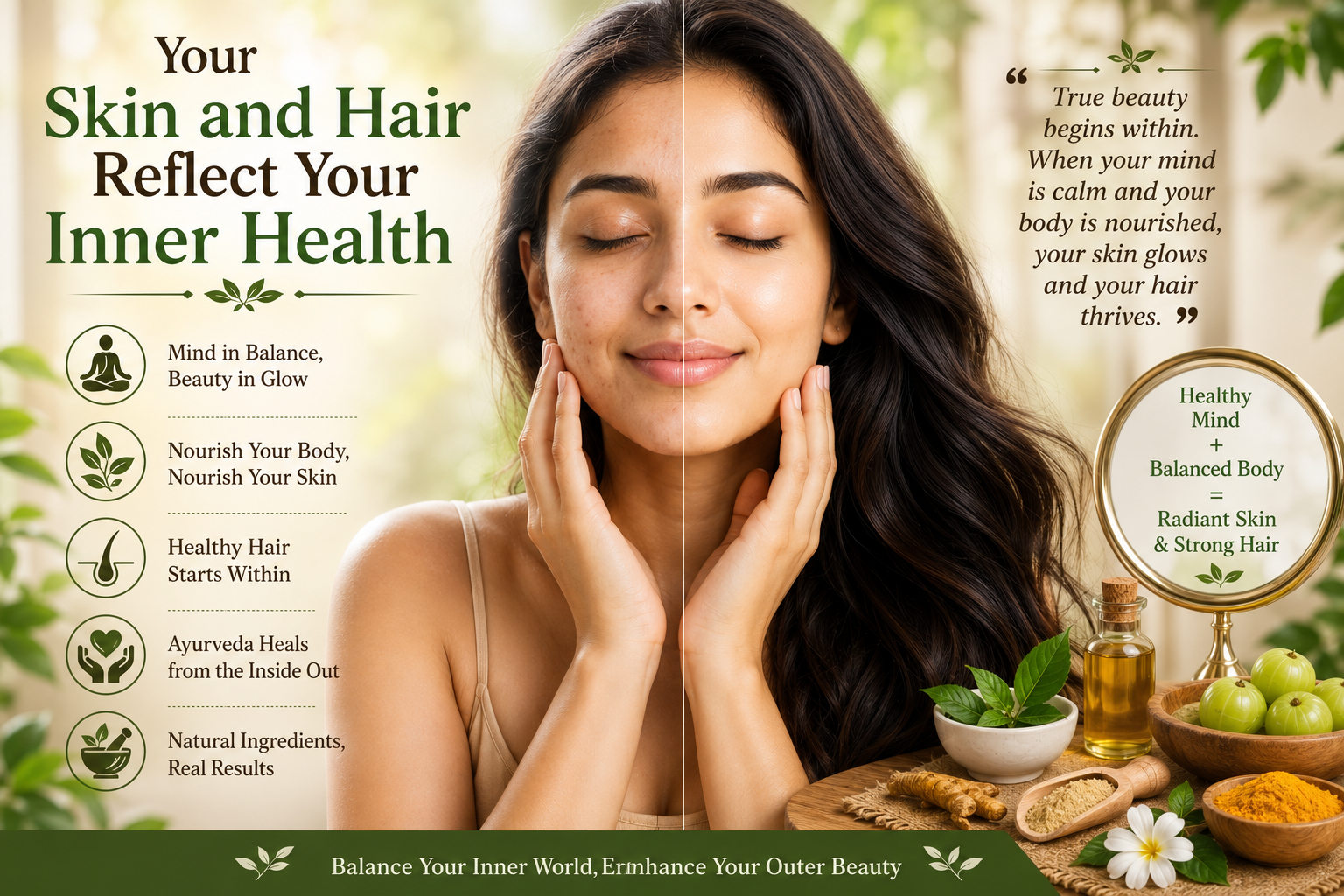
Your skincare routine certainly matters, but it cannot fully compensate for chronic stress. Both Modern Science and Ayurveda agree that healthy skin and strong hair begin with internal balance. While creams, serums, and herbal oils support external care, lasting beauty comes from nourishing your body, calming your mind, and maintaining a healthy lifestyle.
When stress is managed consistently, your skin naturally becomes brighter, your hair grows healthier, and your overall appearance reflects energy rather than fatigue. True beauty is not created by products alone—it is cultivated through balance, mindful living, and proper self-care.
Begin Your Wellness Journey Naturally
At The Kitchen Factory, we believe healthy skin and beautiful hair start from within. Our thoughtfully crafted, nature-inspired wellness products are designed to complement an Ayurvedic lifestyle and support your journey toward naturally radiant skin and stronger hair. Explore our collection and experience holistic skincare inspired by the timeless wisdom of Ayurveda.