
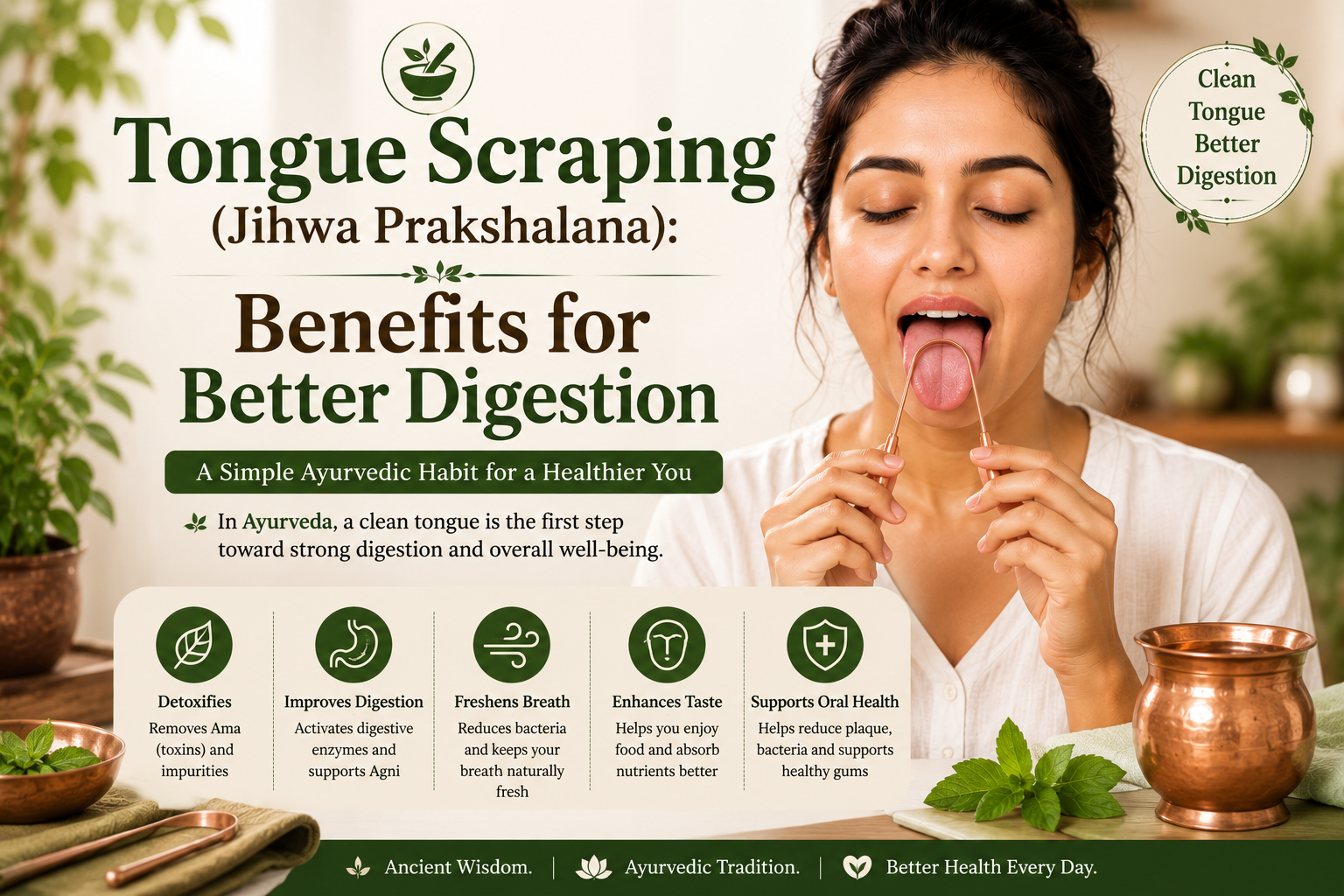
Most of us begin our mornings by brushing our teeth. We spend a few minutes ensuring our teeth are clean and our breath feels fresh. But have you ever noticed the whitish coating on your tongue that remains even after brushing? According to Ayurveda, that coating is not something to ignore—it is one of the earliest signs of your digestive health.
This simple morning practice, known as Jihwa Prakshalana (Tongue Scraping), has been recommended in Ayurvedic texts for thousands of years. While modern dentistry focuses primarily on cleaning the teeth, Ayurveda goes a step further by emphasizing the importance of cleansing the tongue to support healthy digestion, natural detoxification, fresher breath, and overall well-being.
Just one minute every morning can make a remarkable difference. By removing toxins and bacteria that accumulate overnight, Tongue Scraping helps prepare your digestive system for the day ahead while supporting better oral hygiene and overall wellness.
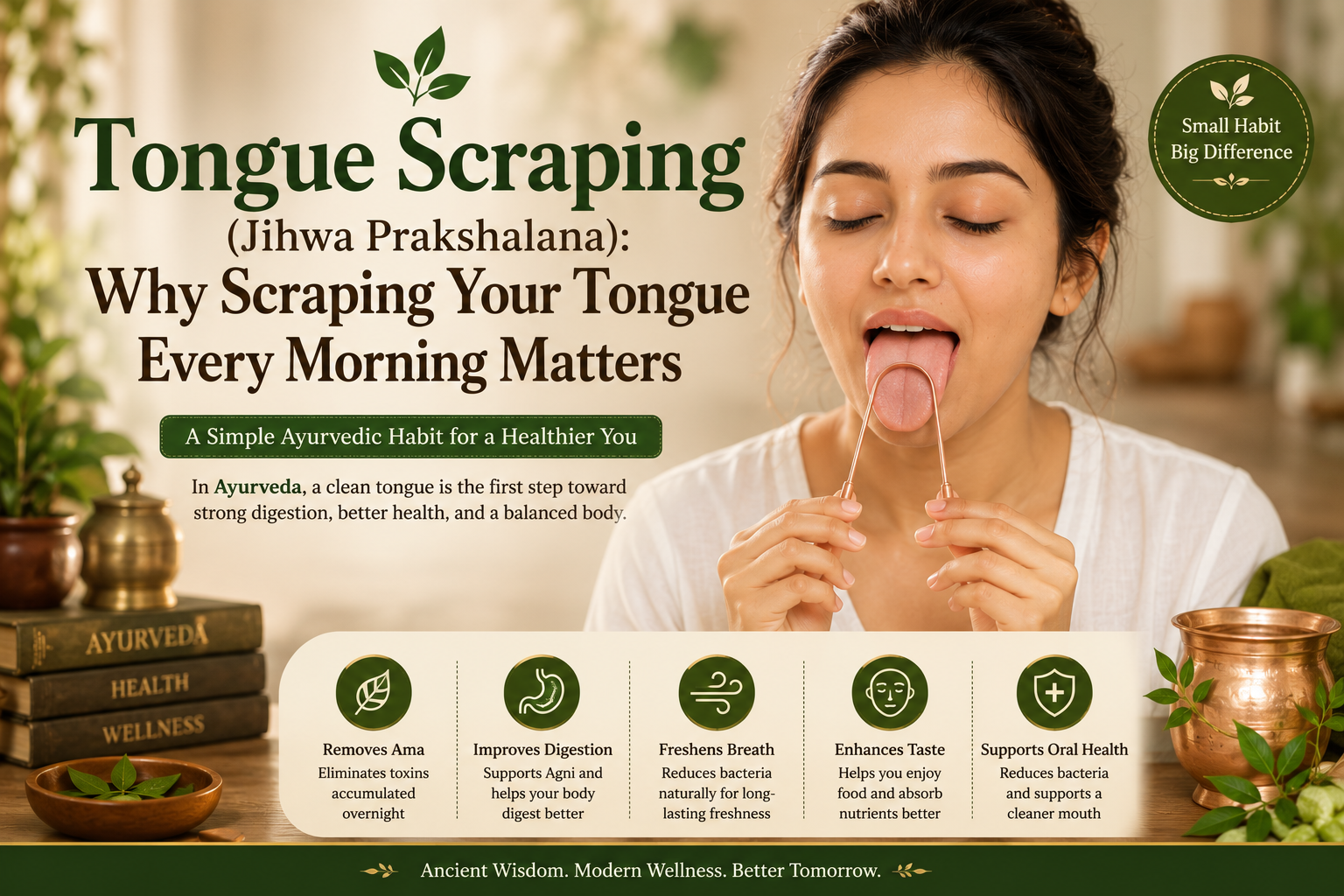
Why Your Tongue Reveals More About Your Health Than You Think
Every morning, your body completes an overnight cleansing process. As you sleep, bacteria, food residue, mucus, dead cells, and waste products naturally accumulate inside your mouth. According to Ayurveda, these accumulated toxins are known as Ama.
Ama is considered one of the primary causes of many health problems. When digestion becomes weak and your Agni (Digestive Fire) is unable to process food efficiently, toxins begin to build up inside the body. One of the earliest places these toxins become visible is on your tongue.
A healthy, pink tongue generally reflects good digestion and balanced internal health. On the other hand, a thick white, yellow, or grey coating may suggest that your digestive system is struggling and that your body is accumulating Ama.
Instead of swallowing these toxins back into your digestive system while drinking your morning tea, coffee, or water, Ayurveda recommends removing them first. This is exactly why Jihwa Prakshalana is considered an essential part of the daily Ayurvedic routine (Dinacharya).
By spending less than a minute scraping your tongue each morning, you support your body’s natural detoxification process while preparing your digestive system to function more efficiently throughout the day.
Why Jihwa Prakshalana Is More Than Just Oral Hygiene
Many people think tongue scraping is simply another way to freshen their breath. While it certainly helps reduce unpleasant odours, its benefits extend far beyond oral cleanliness. In Ayurveda, the tongue is regarded as a mirror of your internal health. Keeping it clean not only improves oral hygiene but also supports stronger digestion, better taste perception, healthier metabolism, and overall wellness.
Rather than treating only the symptoms of poor oral hygiene, Tongue Scraping addresses one of the root causes by removing the layer of bacteria and toxins before they have an opportunity to re-enter your digestive system.
Why Brushing Your Teeth Alone Isn’t Enough
Brushing your teeth is essential for maintaining good oral hygiene, but it doesn’t completely clean your mouth. While a toothbrush removes plaque and food particles from your teeth and gums, it often fails to clean the thousands of tiny papillae that cover the surface of your tongue. These small projections easily trap bacteria, mucus, dead cells, food residue, and toxins throughout the day and night.
According to Ayurveda, simply brushing your teeth without cleaning your tongue allows Ama and harmful bacteria to remain inside the mouth. These toxins may re-enter your digestive system when you drink water or eat breakfast, potentially affecting digestion and overall wellness.
This is why Jihwa Prakshalana (Tongue Scraping) is considered an essential part of the Ayurvedic morning routine. It completes your oral hygiene by removing the coating that brushing alone cannot eliminate.
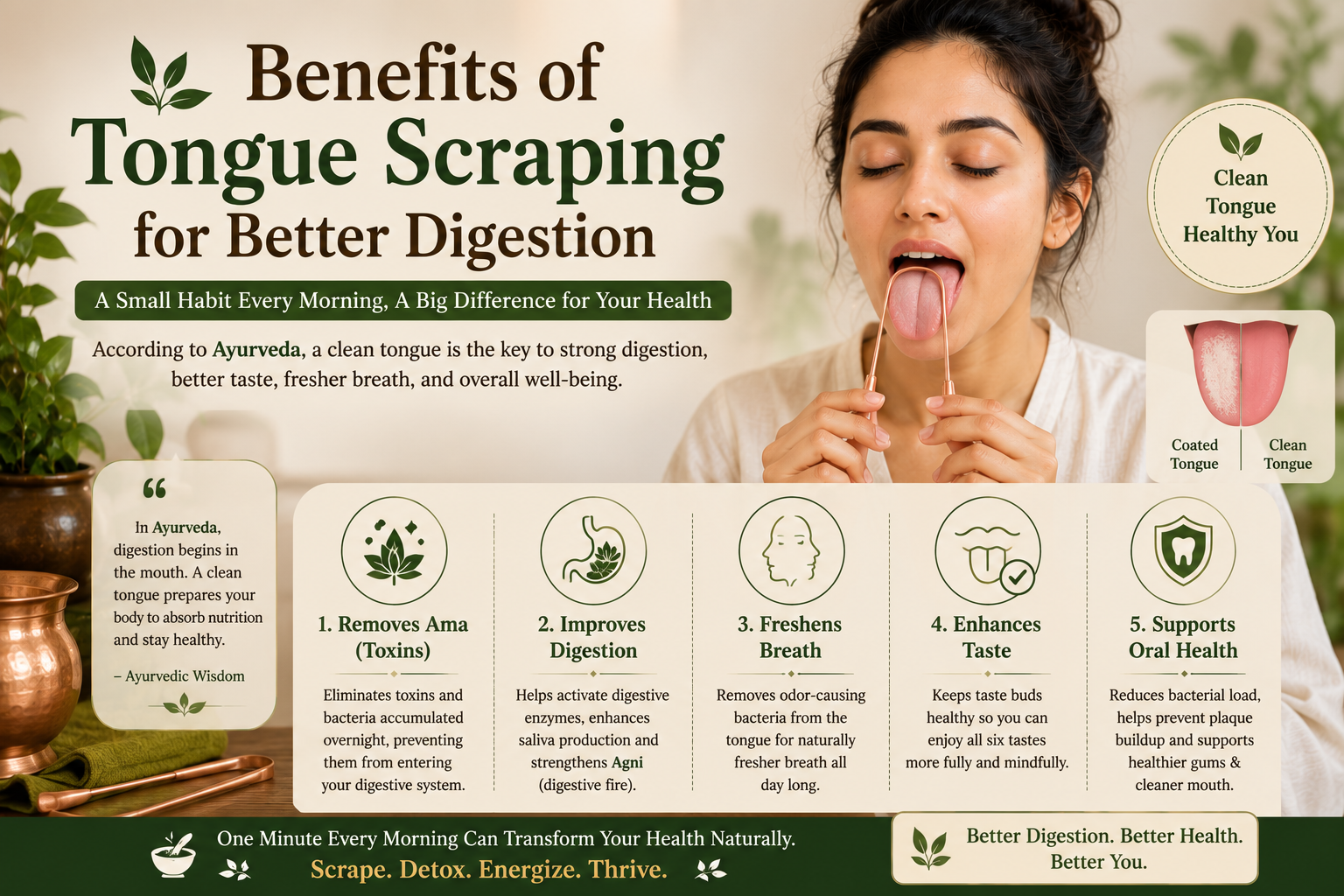
1. Removes Ama (Toxins)
One of the primary reasons Ayurveda recommends tongue scraping is to eliminate Ama, the sticky layer of toxins that accumulates overnight. Removing this coating before eating or drinking prevents these impurities from being swallowed back into the digestive tract.
Daily removal of Ama supports your body’s natural detoxification process and helps maintain a healthier digestive system over time.
2. Supports Better Digestion
Ayurveda teaches that digestion begins in the mouth—not the stomach. A clean tongue allows your taste buds to function properly, helping your brain prepare the digestive system before food even reaches your stomach.
When your taste receptors are free from toxins and buildup:
- Digestive enzymes become more active.
- Saliva production improves naturally.
- Agni (Digestive Fire) becomes stronger.
- Your body digests food more efficiently.
- Nutrient absorption improves.
Healthy digestion is the foundation of good health, and a clean tongue is one of the simplest ways to support it every morning.
3. Freshens Breath Naturally
Bad breath is often caused by bacteria that collect on the tongue rather than on the teeth alone. Mouthwashes may temporarily mask unpleasant odours, but they don’t always remove the source of the problem.
Regular Tongue Scraping naturally removes odor-causing bacteria, helping you enjoy fresher breath throughout the day without relying on strong chemical mouthwashes.
Explore Natural Ayurvedic Wellness Products
4. Enhances Your Sense of Taste Naturally
Have you ever noticed that food sometimes tastes dull or less enjoyable? One possible reason is a coated tongue. When your tongue is covered with Ama, bacteria, and dead cells, your taste buds cannot function at their full potential.
According to Ayurveda, proper taste perception is the first step toward healthy digestion. A clean tongue allows your taste receptors to recognise food more accurately, helping your digestive system prepare itself before the first bite.
Jihwa Prakshalana (Tongue Scraping) helps you experience all six Ayurvedic tastes more clearly:
- Sweet
- Sour
- Salty
- Bitter
- Pungent
- Astringent
Better taste perception also encourages mindful eating and may help reduce unnecessary overeating, supporting long-term digestive health.
5. Supports Better Oral Hygiene
While brushing cleans your teeth and gums, Tongue Scraping completes your oral hygiene routine by reducing the bacterial load across the entire mouth. Regular scraping helps remove microorganisms that contribute to plaque formation, unpleasant breath, and poor oral health.
Making this one-minute habit part of your daily routine contributes to:
- A cleaner and fresher mouth.
- Healthier gums.
- Reduced bacterial buildup.
- Lower plaque formation.
- Long-lasting fresh breath.
What Ayurveda Says About Tongue Scraping
In Ayurveda, the tongue is considered a mirror of your internal health. Ayurvedic practitioners often examine the tongue to understand the condition of your digestion, identify possible Dosha imbalances, and assess the accumulation of Ama. Although tongue appearance alone cannot diagnose a medical condition, it provides valuable insights into your overall digestive wellness.
Different tongue coatings are traditionally associated with different Dosha imbalances:
- White Coating: Often associated with excess Kapha and accumulation of Ama.
- Yellow Coating: May indicate aggravated Pitta Dosha and excess internal heat.
- Brown or Dark Coating: Can be linked to increased Vata Dosha, dehydration, or digestive imbalance.
Daily Jihwa Prakshalana helps maintain a clean tongue, supports your body’s natural detoxification process, and complements a balanced Ayurvedic lifestyle focused on strong digestion and overall well-being.
Discover Ayurvedic Wellness Essentials
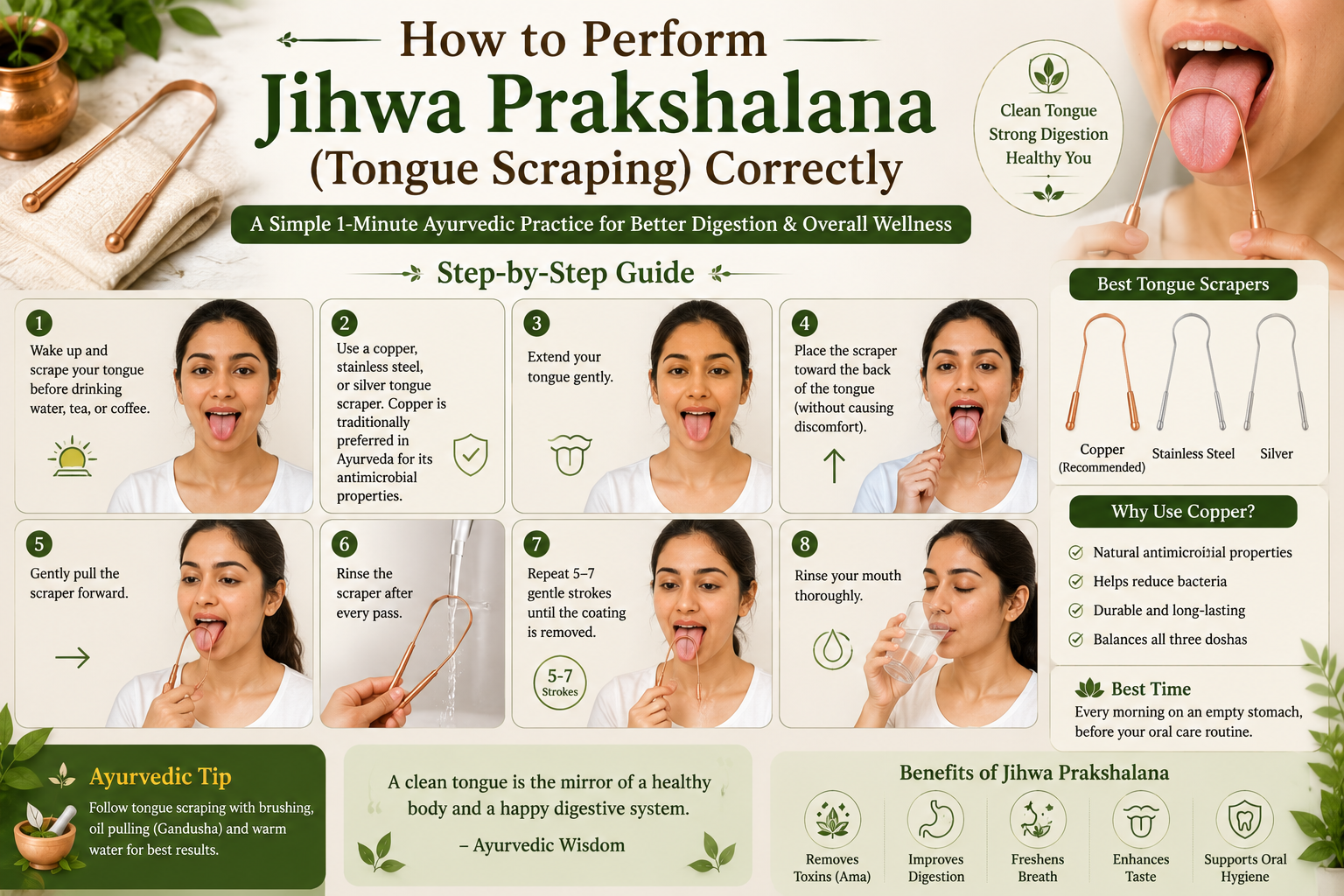
How to Perform Jihwa Prakshalana Correctly
The best part about Jihwa Prakshalana (Tongue Scraping) is that it takes less than a minute to complete, yet it can provide long-lasting benefits for your digestive health and oral hygiene. Performing it correctly every morning helps remove overnight toxin buildup and prepares your digestive system for the day ahead.
Follow these simple steps:
- Wake up and scrape your tongue before drinking water, tea, or coffee.
- Use a copper, stainless steel, or silver tongue scraper. Ayurveda traditionally recommends copper because of its natural antimicrobial properties.
- Gently extend your tongue.
- Place the scraper near the back of your tongue without causing discomfort.
- Pull the scraper forward slowly and gently.
- Rinse the scraper after each stroke.
- Repeat the process 5–7 times until most of the coating has been removed.
- Rinse your mouth thoroughly and continue with brushing, Oil Pulling (Gandusha), and your morning hydration.
Common Mistakes to Avoid
Although tongue scraping is a simple practice, performing it incorrectly can reduce its effectiveness. Keep these tips in mind for the best results:
- Do not scrape too aggressively.
- Avoid plastic tongue scrapers whenever possible; choose durable metal scrapers instead.
- Always wash your scraper thoroughly after every use.
- Replace damaged or rusty scrapers promptly.
- Never scrape until your tongue becomes sore or starts bleeding.
Remember, gentle and consistent practice is far more beneficial than using excessive force.
Explore Natural Ayurvedic Wellness
Make It Part of Your Ayurvedic Morning Routine
Jihwa Prakshalana works even better when combined with other traditional Ayurvedic morning practices. Together, these habits help strengthen digestion, improve oral hygiene, and support overall well-being.
- Oil Pulling (Gandusha)
- Drink a glass of warm water after cleaning your mouth.
- Practice gentle yoga or stretching.
- Spend a few minutes doing Pranayama or meditation.
- Eat a wholesome, balanced breakfast mindfully.
These simple rituals help maintain a healthy Agni (Digestive Fire), encourage natural detoxification, and promote long-term wellness according to Ayurveda.
A Small Habit with Lasting Benefits
In Ayurveda, lasting health begins with strong digestion and effective daily cleansing. Jihwa Prakshalana is one of the simplest yet most powerful practices you can adopt. Spending less than a minute scraping your tongue each morning may help reduce oral bacteria, improve taste perception, freshen your breath, and support healthier digestion.
However, if you notice persistent tongue discoloration, ulcers, pain, swelling, or thick coatings that do not improve over time, consult a qualified healthcare professional for proper evaluation.
Final Thoughts
Good health doesn’t always require complicated routines. Sometimes, the smallest habits create the biggest impact. Jihwa Prakshalana is a perfect example of how one simple Ayurvedic ritual can support digestion, improve oral hygiene, and contribute to your overall well-being.
Tomorrow morning, before reaching for your toothbrush, spend one extra minute scraping your tongue. This ancient Ayurvedic practice may become one of the easiest and most effective habits for supporting your digestive health naturally.
Begin Your Day the Ayurvedic Way
At The Kitchen Factory, we believe lasting wellness is built through simple, natural daily habits inspired by the timeless wisdom of Ayurveda. Explore our collection of blogs to discover practical tips on holistic health, mindful living, natural skincare, and healthy digestion that fit seamlessly into modern life.
Because true wellness isn’t created overnight—it begins with the small habits you practice every single morning.